Water damage in a commercial property can interrupt operations, affect employees and customers, damage equipment, and create safety concerns throughout the building. Whether the problem starts with a plumbing failure, roof leak, sprinkler malfunction, appliance issue, or severe weather event, the response must be organized and timely.
Commercial buildings often contain larger floor areas, more complex plumbing systems, specialized equipment, and multiple occupied spaces. Because of this, water can spread quickly and affect more than one department, office, tenant area, or storage space.
SOS Restoration of Santa Clara County provides professional commercial water damage restoration for businesses and property owners. A structured restoration plan helps control the damage, reduce disruption, and move the property toward normal operations.
Why Commercial Water Damage Requires a Specialized Response
Water damage in a commercial environment can be more complicated than a typical residential incident. Offices, retail stores, warehouses, restaurants, medical spaces, and multifamily properties all have different layouts and operational needs.
A successful restoration plan must consider:
- The source of the water
- The size of the affected area
- The type of building materials involved
- Business equipment and inventory
- Occupied and restricted areas
- Electrical and safety hazards
- Access requirements
- The need to keep certain areas operational
Restoration professionals must evaluate both the physical damage and the way the incident affects the business.
Common Sources of Commercial Water Damage
Commercial properties can experience water damage from a wide variety of sources.
Plumbing System Failures
Larger buildings may contain extensive plumbing networks inside walls, ceilings, utility rooms, and mechanical spaces. A broken pipe, failed fitting, damaged valve, or leaking connection can release water into several areas before the problem is discovered.
Roof Leaks
Commercial roofs may develop leaks because of damaged membranes, drainage issues, aging materials, punctures, or severe weather. Water entering through the roof can affect ceiling systems, insulation, lighting, walls, and stored materials.
Fire Sprinkler Malfunctions
Sprinkler systems are essential for fire protection, but accidental activation, frozen lines, damaged sprinkler heads, or system failures can cause significant indoor flooding.
Restroom and Drain Backups
A blocked drain, overflowing toilet, or sewer-related problem can create both water damage and sanitation concerns. These incidents require careful containment, removal, cleaning, and disposal procedures.
HVAC and Mechanical Equipment
Heating, cooling, refrigeration, and mechanical systems can produce condensation or leak water when components fail. These problems may develop gradually and remain hidden above ceilings or inside service areas.
Severe Weather
Heavy rain and wind can damage roofing, windows, doors, and exterior seals. Water may enter through several locations, making the inspection and drying process more complex.
The Business Impact of Water Damage
The physical damage is only one part of a commercial water emergency. The incident may also affect daily operations, customer access, employee productivity, and inventory.
Potential consequences include:
- Temporary closure of rooms or departments
- Damage to computers and office equipment
- Loss of merchandise or stored materials
- Disruption of scheduled appointments
- Unsafe walking surfaces
- Electrical hazards
- Odor and indoor humidity problems
- Delays in normal production
- Damage to walls, ceilings, and flooring
A fast response can help reduce the amount of time the property remains disrupted.
First Steps After Commercial Water Damage
Safety should come first. Employees and visitors should be kept away from affected areas, especially where water is near electrical systems, damaged ceilings, or contaminated materials.
When safe, the source should be stopped. This may involve closing a water valve, shutting down equipment, or arranging emergency plumbing or roofing repairs.
The affected area should then be inspected to determine how far the water has traveled. Water may move through ceiling cavities, wall systems, carpet, raised flooring, and adjacent rooms.
Business owners should avoid moving electrical devices or entering areas where the structure appears unstable.
Commercial Water Extraction
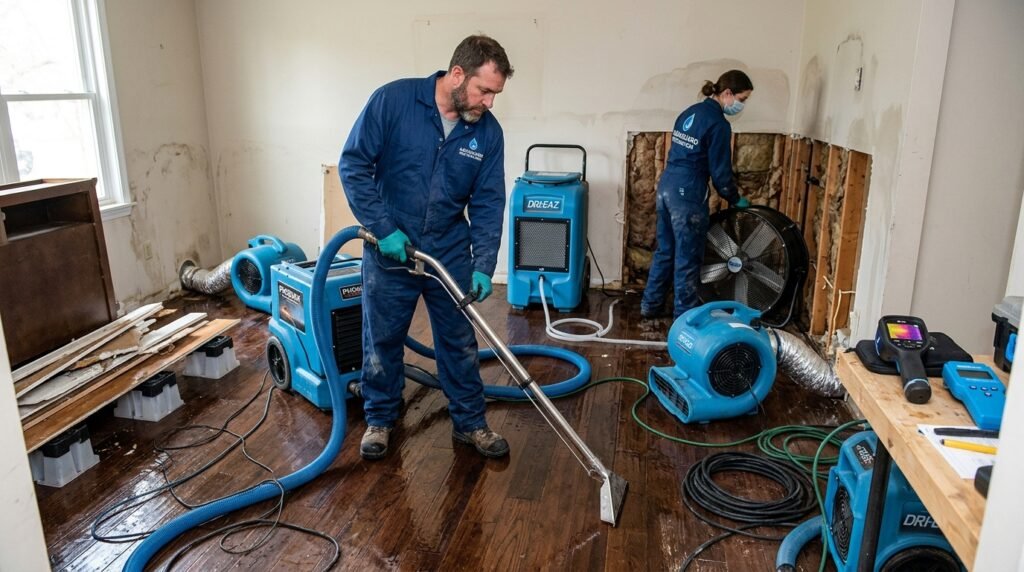
Standing water should be removed as soon as possible. Large commercial spaces may require multiple extraction units and a coordinated approach.
Professional extraction helps remove water from:
- Carpet and carpet padding
- Hard-surface flooring
- Storage rooms
- Office spaces
- Hallways
- Mechanical rooms
- Retail areas
- Warehouses
Removing excess water early reduces the amount of moisture that must be addressed during the drying process.
Protecting Business Contents and Equipment
Commercial properties may contain documents, machinery, inventory, electronics, furniture, and specialized materials. These items should be evaluated based on their exposure and condition.
Some contents may be moved to a dry location, while others may require cleaning, drying, or specialized handling.
Restoration teams may create separate areas for:
- Salvageable items
- Damaged materials
- Contaminated contents
- Items requiring additional evaluation
- Equipment that must remain in place
Good organization helps prevent unaffected contents from being exposed during cleanup.
Structural Drying in Large Buildings
Commercial drying requires more than placing a few fans in the affected room. The drying plan must account for the size of the area, the construction materials, the building layout, and the movement of air.
Air movers and commercial dehumidifiers may be placed throughout the property to remove moisture from the air and building materials.
Moisture readings are taken in areas such as:
- Drywall
- Concrete
- Wood framing
- Ceiling materials
- Carpet
- Subflooring
- Insulation
- Cabinetry
Equipment may be repositioned as conditions improve. The goal is to achieve consistent drying across the entire affected area.
Cleaning and Sanitizing Commercial Spaces
The cleaning process depends on the source of the water. A clean-water plumbing leak is handled differently from a restroom backup or outdoor floodwater.
Affected surfaces may require:
- Detailed cleaning
- Disinfection
- Odor treatment
- Debris removal
- Controlled disposal
- Cleaning of equipment exteriors
- Sanitizing of high-contact surfaces
Areas used for food service, health care, child care, or customer-facing operations may require additional attention.
Limiting Business Interruption
Whenever possible, restoration work can be organized in phases. Unaffected areas may remain accessible while damaged sections are isolated.
Containment barriers and controlled work zones may help separate restoration activity from active business areas. Scheduling and equipment placement can also be planned around operational needs.
Clear communication is important so managers, employees, tenants, and property owners understand which areas are safe to use.
Repairs After Drying
Once the building is dry, repairs can begin. The exact work depends on the materials that were removed or damaged.
Commercial repairs may include:
- Drywall replacement
- Ceiling tile installation
- Flooring repair
- Painting
- Baseboard replacement
- Cabinet repair
- Insulation replacement
- Door and trim repairs
The property should be fully dry before new materials are installed.
Preventing Future Commercial Water Damage
Routine building maintenance can reduce the chance of another water emergency.
Property managers should consider:
- Inspecting roofs and drainage systems
- Checking plumbing rooms regularly
- Maintaining sprinkler systems
- Monitoring water heaters and mechanical equipment
- Inspecting restrooms and break rooms
- Repairing window and door seals
- Addressing recurring drain problems
- Training staff to report leaks immediately
- Keeping water shutoff information accessible
Early detection is especially important in areas that are not occupied every day.
Commercial Water Damage Restoration in Santa Clara County
Commercial water damage can affect operations, safety, inventory, equipment, and the condition of the building. A complete response should include inspection, extraction, drying, cleaning, monitoring, and repairs.
SOS Restoration of Santa Clara County helps businesses and property owners respond to water-related emergencies with a professional restoration process. Our team works to identify affected areas, remove water, dry the structure, and help restore the property efficiently.
When water damage affects your commercial space, prompt action can help reduce disruption and prevent the problem from spreading. Contact SOS Restoration of Santa Clara County for professional commercial water damage restoration.