How Water Damage Can Affect Your Property Over Time
Water damage is not always as obvious as a flooded room or a burst pipe. In many cases, moisture begins in one area and slowly spreads into walls, flooring, ceilings, cabinets, and structural materials. What appears to be a minor leak can become a much larger restoration issue when it is not addressed quickly.
For homeowners and business owners, understanding how water damage develops is important. Early action can help reduce structural deterioration, protect belongings, and prevent moisture from reaching additional areas of the property.
SOS Restoration of Santa Clara County provides professional water damage restoration services designed to identify affected materials, remove excess water, dry the structure, and restore damaged areas.
Water Damage Often Spreads Beyond the Visible Area
Water follows the easiest available path. It can move underneath flooring, travel along framing, soak into drywall, and collect inside wall cavities. Because many building materials are porous, they can absorb moisture even when they are not directly beneath the source of the leak.
For example, a plumbing leak in a bathroom may affect the wall behind the fixture, the flooring below it, the room on the other side of the wall, or even the ceiling on a lower level.
This is why surface drying is not enough. A complete inspection is necessary to determine how far the moisture has traveled.
The First Hours After Water Damage
The first few hours after water intrusion are especially important. Standing water may begin soaking into carpet, wood, drywall, insulation, and furniture almost immediately.
During this early stage, property owners may notice:
- Wet flooring
- Water stains
- Dripping ceilings
- Damp walls
- Swollen baseboards
- Pooling water
- Increased humidity
- Unusual odors
Removing water quickly can help reduce the amount absorbed by surrounding materials. The sooner the source is stopped and extraction begins, the better the opportunity to preserve materials that may still be salvageable.
What Happens When Moisture Remains
When water is not removed properly, moisture can continue affecting the property even after the visible water is gone.
Drywall Can Weaken
Drywall absorbs water quickly. Once saturated, it may become soft, swollen, stained, or unstable. In some cases, sections of drywall can be dried. In other situations, damaged areas may need to be removed.
Wood Can Swell or Warp
Wood flooring, framing, cabinets, and trim may absorb moisture and change shape. Boards can cup, buckle, separate, or develop cracks.
Fast drying can sometimes reduce the extent of the damage, but prolonged exposure may make repairs or replacement necessary.
Flooring Can Become Unstable
Carpet can trap water in the padding and subfloor beneath it. Laminate flooring may swell at the edges, while hardwood may warp or lift.
Tile may appear unaffected on the surface, but moisture can still remain below it and weaken the adhesive or subfloor.
Insulation Can Lose Effectiveness
Wet insulation may compress, hold moisture, and lose its ability to perform properly. Because insulation is often hidden behind walls or above ceilings, damage may not be immediately visible.
Paint and Finishes Can Deteriorate
Bubbling paint, peeling finishes, discoloration, and staining are common signs of hidden moisture. These cosmetic changes may indicate that the material beneath the surface is still wet.
Common Types of Water Damage Emergencies
Water damage can result from many different sources. Each situation requires a careful evaluation to determine the proper restoration approach.
Plumbing Failures
Broken pipes, loose connections, leaking fixtures, and damaged supply lines are common causes of indoor water damage. Plumbing failures can affect kitchens, bathrooms, laundry rooms, garages, and utility areas.
Appliance Leaks
Dishwashers, washing machines, refrigerators, and water heaters can release water when hoses, seals, valves, or internal components fail.
Because appliances are often located near cabinets or walls, water can remain hidden for an extended period.
Roof Leaks
Damaged roofing materials, flashing problems, clogged gutters, and storm damage can allow water to enter through the roof. The moisture may affect attic insulation, ceiling materials, walls, and electrical components.
Drain and Toilet Overflows
Water from drains or toilet overflows may contain contaminants. These situations require specialized cleaning, material removal, and sanitizing.
Stormwater Intrusion
Heavy rain can enter through roof openings, windows, doors, or areas around the foundation. Storm-related damage may affect several rooms and building materials at once.
Why Moisture Detection Is Important
One of the most important parts of water damage restoration is locating moisture that cannot be seen.
Professional technicians may use moisture meters, thermal imaging tools, and other specialized equipment to evaluate walls, flooring, ceilings, and structural components.
Moisture detection helps answer important questions, including:
- How far has the water traveled?
- Which materials are still wet?
- Can the affected materials be dried?
- Which areas require removal?
- Where should drying equipment be placed?
- When has the structure reached an acceptable moisture level?
Without proper testing, hidden moisture can remain behind and continue causing problems.
The Professional Restoration Process
A professional water damage restoration project generally includes several important stages.
Emergency Inspection
The affected property is inspected to identify the source, determine the extent of the damage, and evaluate potential safety concerns.
Water Removal
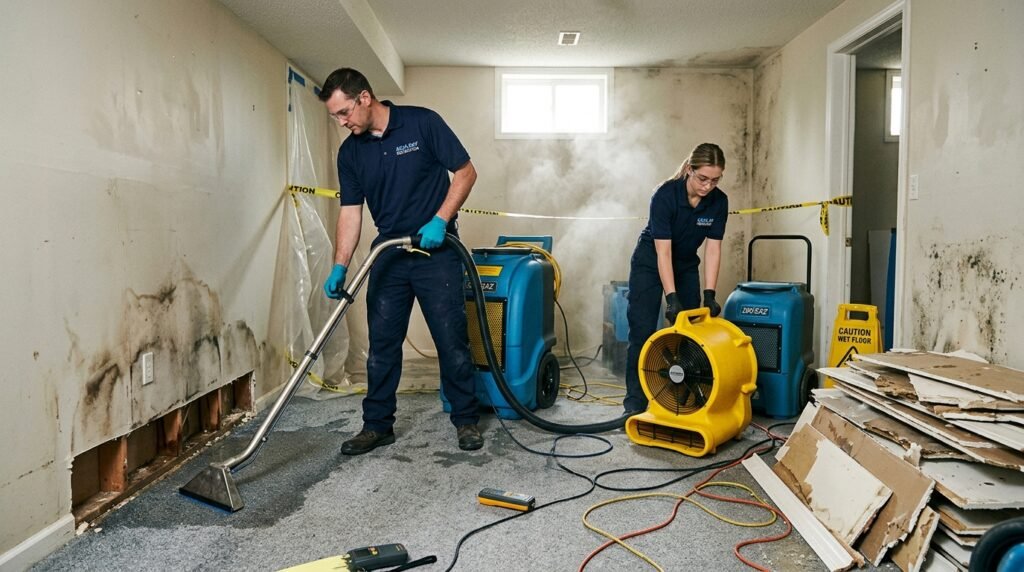
Standing water is removed using professional extraction equipment. This step helps reduce moisture levels and prepares the area for drying.
Material Evaluation
Technicians determine which materials can be cleaned and dried and which materials are too damaged or contaminated to keep.
Structural Drying
Commercial air movers and dehumidifiers are used to dry walls, flooring, framing, and other materials. Equipment placement may be adjusted as moisture levels change.
Cleaning and Sanitizing
Affected surfaces are cleaned according to the source and condition of the water. Odor treatments and sanitizing procedures may also be used.
Repairs and Restoration
After drying and cleaning are complete, damaged drywall, flooring, trim, paint, insulation, or other materials may be repaired or replaced.
Why DIY Cleanup May Not Be Enough
Property owners may be able to wipe up a small spill, but larger water damage incidents usually require professional equipment and experience.
Household fans may circulate air, but they may not remove enough moisture from the structure. Shop vacuums can remove some water, but they may not reach moisture trapped beneath floors or inside walls.
There is also a risk of electrical hazards, contaminated water, unstable ceilings, and damaged structural materials.
Professional restoration helps ensure that the affected area is evaluated completely rather than cleaned only at the surface.
Warning Signs of Hidden Water Damage
Some water damage is discovered days or weeks after the original leak. Property owners should watch for signs such as:
- Musty or damp odors
- Water stains that grow over time
- Peeling or bubbling paint
- Soft spots in walls or ceilings
- Warped flooring
- Swollen cabinets
- Loose baseboards
- Unexplained indoor humidity
- Dark discoloration
- Recurring moisture near plumbing fixtures
These signs may indicate that moisture is still present inside the property.
Reducing the Risk of Future Water Damage
Preventive maintenance can help property owners identify problems before they lead to a major water emergency.
Helpful steps include:
- Inspecting appliance hoses and supply lines
- Checking under sinks for leaks
- Maintaining roofing and gutters
- Monitoring water heaters
- Repairing damaged seals around windows and doors
- Addressing slow drains
- Inspecting ceilings after storms
- Knowing the location of the main water shutoff valve
- Replacing damaged plumbing components
- Responding to small leaks immediately
Regular inspections are especially important in areas where plumbing, appliances, and roofing materials are older.
Contact SOS Restoration of Santa Clara County
Water damage can continue affecting a property long after the visible water has disappeared. Hidden moisture can weaken materials, damage finishes, and create the need for more extensive repairs.
SOS Restoration of Santa Clara County provides professional water damage restoration for homes and businesses. Our team helps identify the source, locate hidden moisture, remove water, dry affected materials, clean damaged areas, and support the repair process.
When water enters your property, fast action matters. Contact SOS Restoration of Santa Clara County for dependable water damage restoration and a thorough response from inspection through recovery.