
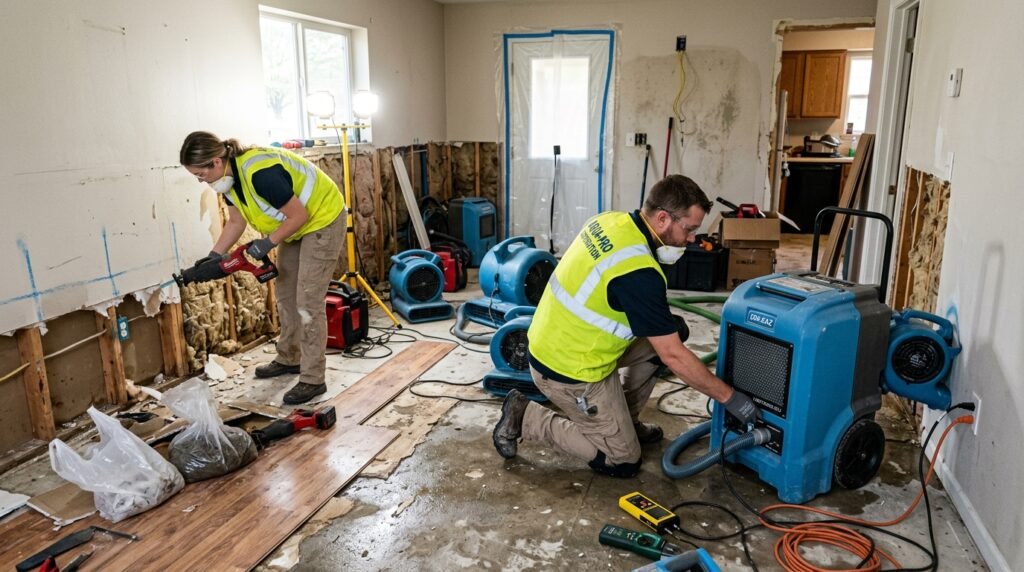
Ceiling water damage can begin with a small stain and quickly develop into a serious property concern. Water entering from a roof leak, plumbing line, bathroom, appliance, or heating and cooling system can collect above the ceiling and spread into drywall, insulation, framing, walls, and electrical areas.
Because the source is often hidden, ceiling water damage should not be treated as a simple cosmetic issue. Painting over a stain does not remove the moisture or repair the problem that caused it.
SOS Restoration of Santa Clara County provides professional water damage restoration for ceiling leaks and related property damage. A thorough inspection helps identify the source, evaluate the affected materials, and determine the correct drying and repair process.
Common Causes of Ceiling Water Damage
The location of the stain can provide clues, but it does not always reveal the exact source. Water can travel along pipes, framing, or roof components before it becomes visible.
Roof Leaks
Damaged shingles, roofing membranes, flashing, vents, or drainage systems can allow rainwater to enter the attic. From there, water may soak insulation and ceiling materials.
Roof-related ceiling damage may become more noticeable after storms or periods of heavy rain.
Plumbing Leaks
Water supply pipes and drain lines often run between floors and above ceilings. A small leak from a pipe connection can slowly saturate surrounding materials.
Plumbing leaks may occur continuously or only when a fixture is being used.
Bathroom Overflows
A bathtub, shower, toilet, or sink overflow on an upper floor can send water into the ceiling below. Water may also escape through damaged seals, grout, or plumbing connections.
Appliance Problems
Washing machines, refrigerators, dishwashers, and water heaters may cause ceiling damage when they are located on an upper level. A leaking supply line or drain connection can release water into the floor system.
HVAC Condensation
Air-conditioning systems and drain lines can produce water damage when condensation is not draining correctly. A blocked or damaged condensate line may cause water to collect above the ceiling.
Early Warning Signs
Some ceiling leaks are discovered before the material begins dripping. Recognizing the early signs can help limit the affected area.
Watch for:
- Yellow or brown ceiling stains
- Bubbling paint
- Peeling texture
- Sagging drywall
- Soft ceiling material
- Cracks around the damaged area
- Damp or musty odors
- Moisture near light fixtures
- Discoloration that expands after rain
- Repeated staining in the same location
A ceiling that is sagging or holding water may be unstable. The area below it should be avoided until it can be inspected safely.
Why a Ceiling Leak Can Be Dangerous
Ceiling water damage can create several hazards. Wet drywall becomes heavier and weaker as it absorbs water. If enough moisture collects, part of the ceiling may collapse.
Water near light fixtures, wiring, outlets, or electrical equipment can also create a serious safety risk.
Additional concerns include:
- Falling ceiling materials
- Damaged insulation
- Hidden framing damage
- Electrical exposure
- Moisture spreading into walls
- Damage to flooring and furniture below
- Indoor humidity and odor problems
The source should be stopped before repairs begin.
What to Do When You Notice Ceiling Water Damage
Avoid standing directly beneath a swollen or sagging ceiling. Move people, pets, furniture, and valuable items away from the area.
Do not touch wet electrical fixtures or attempt to remove ceiling material near wiring.
When it is safe, stop the water source. Depending on the situation, this may involve turning off the main water supply, stopping the use of an upstairs fixture, or arranging a roof or plumbing repair.
The damaged area should then be professionally evaluated. Even a small stain may be connected to a larger wet area above the ceiling.
Locating the Source
Finding the source is often more difficult than repairing the visible stain. Restoration professionals may inspect the space above the ceiling, nearby plumbing lines, roofing components, bathrooms, mechanical systems, and surrounding walls.
Moisture-detection equipment can help identify where water is present without opening every surface.
The source must be corrected before drying and restoration can be completed. Otherwise, the ceiling may become wet again.
Removing Trapped Water
If water has collected above the ceiling, controlled removal may be necessary. This should be performed carefully because the ceiling material may be unstable.
Opening the wrong area without preparation can cause water and debris to fall suddenly. Professional technicians evaluate the safest way to access and drain the affected space.
Standing water on the floor should also be extracted to prevent damage to flooring, baseboards, walls, and belongings.
Evaluating Ceiling Materials
The condition of the ceiling determines whether it can be dried or must be removed.
Ceiling materials may require removal when they are:
- Sagging
- Heavily saturated
- Crumbling
- Contaminated
- Structurally unstable
- Separated from the framing
- Damaged beyond repair
Removing compromised material provides access to wet insulation, framing, pipes, and concealed spaces.
In some cases, limited sections can be removed while surrounding areas remain in place.
Drying the Ceiling Cavity
After the source has been corrected and damaged materials have been addressed, the ceiling cavity must be dried.
The drying process may involve:
- Commercial air movers
- Dehumidifiers
- Directed airflow
- Moisture monitoring
- Removal of wet insulation
- Controlled ventilation
- Drying of framing and wall cavities
Drying should continue until moisture readings confirm that the area has reached an acceptable condition.
Installing new drywall before the framing and surrounding materials are dry can trap moisture inside the ceiling.
Cleaning and Odor Control
Water may carry dirt, insulation particles, or contaminants into the affected area. Cleaning requirements depend on the source of the water.
The restoration process may include cleaning framing, sanitizing surfaces, removing damaged insulation, controlling dust, and treating odors.
When water originates from a drain, toilet, or outdoor source, contaminated materials may need to be removed and disposed of.
Repairing the Ceiling
Once drying and cleaning are complete, the ceiling can be restored.
Repair work may include:
- Replacing insulation
- Installing new drywall
- Applying joint compound
- Matching ceiling texture
- Priming stained areas
- Repainting
- Reinstalling trim or fixtures
The repair should address both appearance and structural condition. The finished ceiling should not simply hide the original damage.
Preventing Future Ceiling Leaks
Regular inspections can help identify problems before they cause major damage.
Helpful preventive steps include:
- Inspecting the roof after severe weather
- Cleaning gutters and drainage systems
- Checking bathrooms for damaged seals
- Monitoring plumbing connections
- Maintaining HVAC drain lines
- Replacing worn appliance hoses
- Watching for recurring ceiling stains
- Investigating unexplained odors
- Repairing small leaks promptly
Upper-floor laundry rooms, bathrooms, and mechanical areas should be checked regularly.
Ceiling Water Damage Restoration in Santa Clara County
Ceiling water damage may indicate a hidden plumbing, roofing, appliance, or HVAC problem. Ignoring the stain can allow moisture to spread into insulation, framing, walls, and electrical areas.
SOS Restoration of Santa Clara County provides professional water damage restoration for ceiling leaks and related damage. Our team helps identify the source, evaluate the affected area, remove damaged materials, dry the structure, and prepare the ceiling for proper repairs.
When you notice staining, sagging, dripping, or other signs of ceiling water damage, take action immediately. Contact SOS Restoration of Santa Clara County for a complete inspection and professional restoration service.