When homeowners think about fire damage, they often picture burned walls, damaged furniture, and visible flames. However, smoke and soot can cause serious damage even in areas that were never directly touched by fire.
Smoke travels quickly and can move through doorways, ventilation systems, wall openings, attics, and small cracks. Soot particles may settle on nearly every surface in the home. Without proper treatment, the damage can continue long after the fire has been extinguished.
What Is Soot?
Soot is a fine residue created when materials do not burn completely. Its composition depends on what was involved in the fire.
Burning wood, plastic, fabric, cooking oil, rubber, chemicals, and synthetic materials can each create different types of soot. Some residue may be dry and powdery, while other soot may be oily, sticky, or difficult to remove.
Because soot may contain harmful particles and chemical residue, homeowners should avoid touching or cleaning heavily affected surfaces without appropriate protection.
Why Smoke Spreads So Far
Smoke naturally moves toward cooler areas and follows air currents throughout a building. It can enter rooms far from the original fire and settle inside cabinets, closets, drawers, electronics, ventilation systems, and wall cavities.
Smoke may also move between floors through stairways, plumbing openings, electrical outlets, and HVAC ducts.
This means that a room can appear unaffected while still containing smoke residue and odors.
Damage to Walls and Ceilings
Smoke and soot can discolor painted surfaces, wallpaper, drywall, and ceilings. Yellow, gray, or black stains may develop after the fire.
Attempting to wash these surfaces with water or ordinary household cleaners can make the staining worse. Some soot types react with moisture and become more difficult to remove.
Professional cleaning determines whether a surface can be restored or whether it needs sealing, repainting, or replacement.
Damage to Metal and Appliances
Soot may contain acidic compounds that cause metal corrosion. Door hardware, faucets, appliances, tools, electronics, and plumbing fixtures may begin deteriorating if residue remains on them.
Metal surfaces should be evaluated and cleaned promptly. Delayed treatment may result in permanent discoloration, rust, or mechanical failure.
Damage to Fabrics and Furniture
Curtains, carpeting, bedding, clothing, upholstery, and mattresses absorb smoke easily. Even when these items are not burned, they may hold strong odors and fine particles.
Washing smoke-damaged fabrics in a household washing machine without proper treatment can set odors or stains permanently. Different materials require different cleaning and deodorizing methods.
Some belongings can be cleaned successfully, while others may need to be replaced.
Damage to Electronics
Smoke particles can enter computers, televisions, appliances, sound systems, and other electronic devices. Soot may settle on internal components and contribute to corrosion or electrical problems.
Do not turn on electronics that were exposed to fire, smoke, heat, or water. Powering them on may cause additional damage or create a safety risk.
Electronics should be inspected by qualified professionals before use.
Health Concerns
Smoke residue may irritate the eyes, throat, skin, and respiratory system. Children, older adults, pets, and individuals with asthma or other breathing conditions may be especially sensitive.
Even after visible smoke is gone, particles can remain on surfaces and in the air. Professional air filtration and detailed cleaning may be necessary before the property is safe to occupy.
Why Smoke Odor Returns
Some homeowners notice that smoke odor becomes stronger during warm or humid weather. This can happen because heat and moisture release odor molecules trapped inside porous materials.
Painting, spraying fragrance, or opening windows may provide temporary relief but does not remove the source. Lasting odor removal requires cleaning, deodorizing, sealing, or replacing the affected materials.
Professional Cleaning Is Important
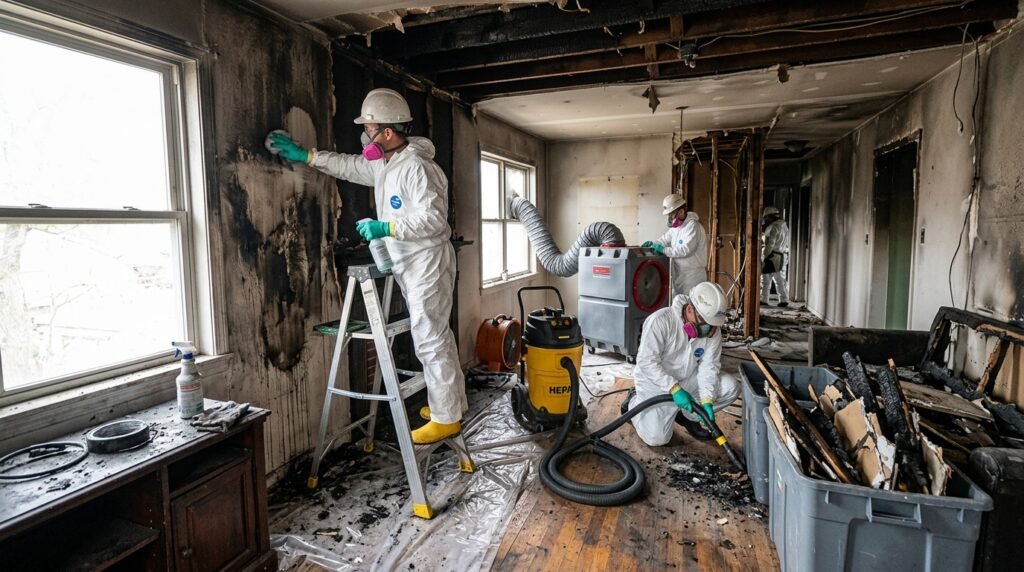
Smoke and soot cleanup should be customized to the type of fire and the materials affected. Restoration professionals may use HEPA filtration, specialized vacuums, dry-cleaning methods, chemical sponges, air scrubbers, fogging treatments, and other equipment.
Incorrect cleaning can spread residue, damage surfaces, and make stains more difficult to remove.
After a fire, visible flames may be gone, but smoke and soot can continue affecting the home. Prompt inspection and professional cleaning can help prevent corrosion, permanent staining, recurring odors, damaged belongings, and indoor air quality concerns.
Homeowners should avoid handling heavily contaminated materials and seek assistance as soon as the property is safe to access.