Once a fire has been extinguished, homeowners may feel that the immediate danger has ended. However, the hours and days following a fire are extremely important. Smoke, soot, water, weather exposure, and structural damage can continue harming the property if they are not addressed quickly.
This additional deterioration is known as secondary damage. Taking prompt action can protect the home and improve the chances of restoring affected materials.
Secure Broken Windows and Doors
Fire, heat, or emergency response activities may leave windows broken and doors damaged. Openings allow rain, wind, insects, animals, and unauthorized people to enter the property.
Emergency board-up services can cover damaged doors, windows, and wall openings. Securing the building also helps protect personal belongings that remain inside.
Homeowners should avoid entering unstable areas or attempting to install boards without professional assistance.
Cover Roof Damage
A damaged roof can allow rainwater to enter the home. Even a small opening may lead to wet insulation, stained ceilings, damaged drywall, mold growth, and electrical concerns.
Temporary roof tarping can reduce water intrusion until permanent roofing repairs are completed. Roof work should only be performed when the structure has been inspected and considered safe.
Remove Water Promptly
Water used to control the fire may remain inside flooring, walls, ceilings, insulation, and furniture. Standing water should be extracted as quickly as possible.
Drying the property requires more than opening windows or using household fans. Professional air movers, dehumidifiers, moisture meters, and drying systems may be needed to reach moisture hidden inside building materials.
Without proper drying, water can cause swelling, warping, mold, odors, and structural deterioration.
Prevent Mold Growth
Mold can develop when moisture remains inside the property. Areas behind drywall, beneath flooring, inside cabinets, and around insulation are especially vulnerable.
Homeowners may not immediately notice mold because it can begin in hidden spaces. A musty odor, discoloration, or increasing humidity may indicate a moisture problem.
Removing water and controlling humidity are essential parts of preventing mold after a fire.
Limit Soot Damage
Soot can permanently stain walls, ceilings, fabrics, metal, and other materials. It may also cause corrosion when it remains on appliances, fixtures, electronics, and hardware.
Avoid wiping soot with wet towels or using regular household cleaning products. Incorrect cleaning can spread the residue and push it deeper into porous surfaces.
Professional soot removal should begin as soon as safely possible.
Do Not Run the HVAC System
Smoke and soot can enter air ducts and heating or cooling equipment. Turning on the HVAC system may distribute particles throughout the property.
Leave the system off until it has been inspected. Filters, vents, ductwork, coils, and mechanical components may require cleaning or replacement.
Protect Undamaged Areas
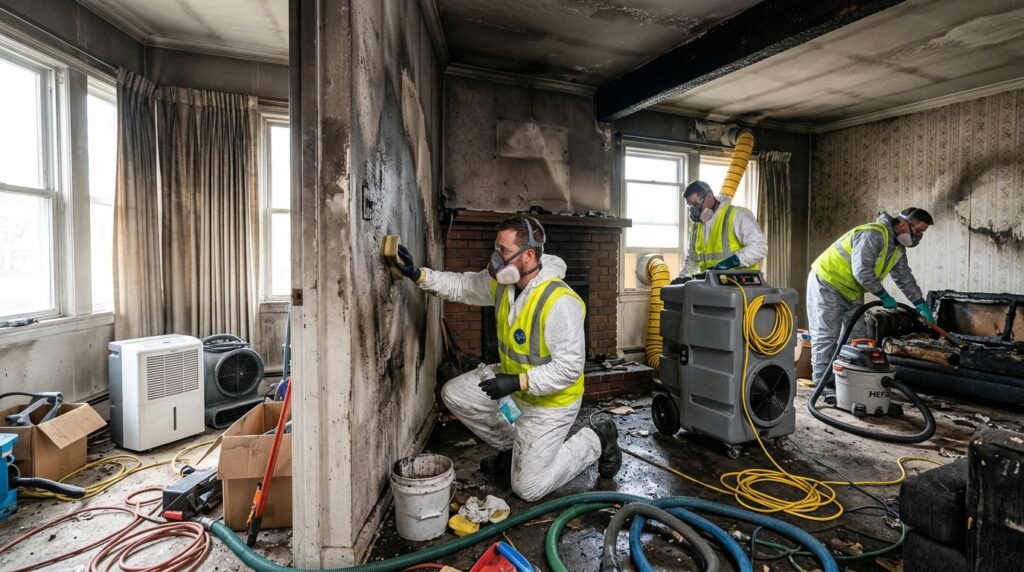
Restoration professionals may use plastic barriers, floor coverings, air filtration equipment, and controlled access areas to prevent contamination from spreading.
Homeowners should limit movement through damaged rooms. Walking across soot-covered flooring can carry residue into clean areas and create additional cleanup work.
Document Everything Before Cleaning
Before items are moved, cleaned, or discarded, take photographs and videos of the damage. Document each room carefully and create a list of affected belongings.
Save receipts for temporary housing, meals, clothing, transportation, emergency repairs, and other fire-related expenses.
Proper documentation can support the insurance process and help homeowners track the recovery work.
Avoid Common Mistakes
After a fire, homeowners should avoid:
- Entering the property without official approval.
- Turning on lights, appliances, or electronics.
- Eating food exposed to heat, smoke, soot, or firefighting chemicals.
- Using household vacuums on soot.
- Washing smoke-damaged clothing without professional guidance.
- Attempting structural repairs without proper inspection.
- Throwing away damaged items before documenting them.
These actions may create safety risks or make certain items more difficult to restore.
Start Restoration Quickly
Fire damage restoration may include emergency board-up, roof tarping, water extraction, structural drying, smoke cleaning, soot removal, odor treatment, contents restoration, repairs, and reconstruction.
The sooner the property is inspected, the easier it may be to identify materials that can be cleaned and saved. Delays may allow moisture, corrosion, odors, and contamination to spread.
A house fire can leave homeowners feeling uncertain and emotionally exhausted. Focusing on one step at a time can make the situation more manageable. Secure the property, document the damage, prevent water and smoke from spreading, and request professional assistance.
Fast action cannot undo what happened, but it can reduce further damage and help create a clearer path toward restoring the home.