Smoke damage can remain inside a home long after the fire has been extinguished. Even when flames affect only one room, smoke can travel through hallways, air vents, wall cavities, closets, and other areas of the property. It may leave behind dark stains, strong odors, oily residue, and fine particles that are difficult to remove with regular household cleaning.
For homeowners, the aftermath can feel overwhelming. Knowing what to do first can help protect the property and prevent further damage.
Wait Until the Property Is Safe
Do not enter a fire-damaged home until firefighters or local authorities confirm that it is safe. Smoke damage often occurs alongside structural damage, electrical hazards, weakened ceilings, and water damage from firefighting efforts.
Even when a room looks stable, hidden dangers may still be present. Avoid touching walls, furniture, or electrical devices until the area has been properly inspected.
Document the Damage
Before moving items or beginning cleanup, take photographs and videos of every affected area. Capture wide views of rooms as well as close-up images of soot stains, damaged furniture, walls, ceilings, electronics, clothing, and other belongings.
Documentation may be necessary for insurance purposes. It can also help restoration professionals understand the original condition of the property before cleaning begins.
Avoid discarding damaged items until your insurance provider has reviewed them or given approval.
Avoid Household Cleaning Methods
Smoke residue is not ordinary dust. Depending on what burned, soot may be dry and powdery or oily and sticky. Using the wrong cleaning method can spread the residue, push it deeper into surfaces, or create permanent stains.
Do not scrub soot-covered walls with water or ordinary household cleaners. Water may react with certain types of soot and make the staining worse.
Household vacuums should also be avoided because they may release fine particles back into the air. Professional HEPA filtration equipment is designed to capture small particles more safely.
Turn Off the HVAC System
Smoke and soot can enter air ducts and mechanical systems. If the heating or cooling system is turned on, it may spread contamination into rooms that were not initially affected.
Leave the HVAC system off until it has been inspected. Filters, vents, ductwork, and internal components may require cleaning or replacement.
Remove Yourself From Strong Odors
Smoke odor may cause headaches, throat irritation, coughing, or eye discomfort. Children, older adults, pets, and individuals with respiratory conditions may be especially sensitive.
If the odor is strong, it is generally safer to remain outside the property until the air has been evaluated and the cleanup process has started.
Opening windows may provide some ventilation, but it will not remove smoke particles trapped inside walls, flooring, furniture, and insulation.
Protect Unaffected Areas
Smoke particles can be transferred from one room to another on shoes, clothing, tools, and furniture. Limit movement through damaged rooms whenever possible.
Restoration professionals may install protective barriers and use air filtration equipment to prevent contamination from spreading.
Avoid carrying soot-covered items through clean areas without proper protection.
Address Water Damage at the Same Time
Smoke damage and water damage often occur together. Water used to extinguish a fire may remain beneath flooring, inside drywall, or around insulation.
Moisture should be extracted and dried quickly. Otherwise, the property may develop mold, damaged flooring, warped materials, and additional odors.
A complete restoration plan should address both smoke contamination and moisture.
Begin Professional Smoke Damage Restoration
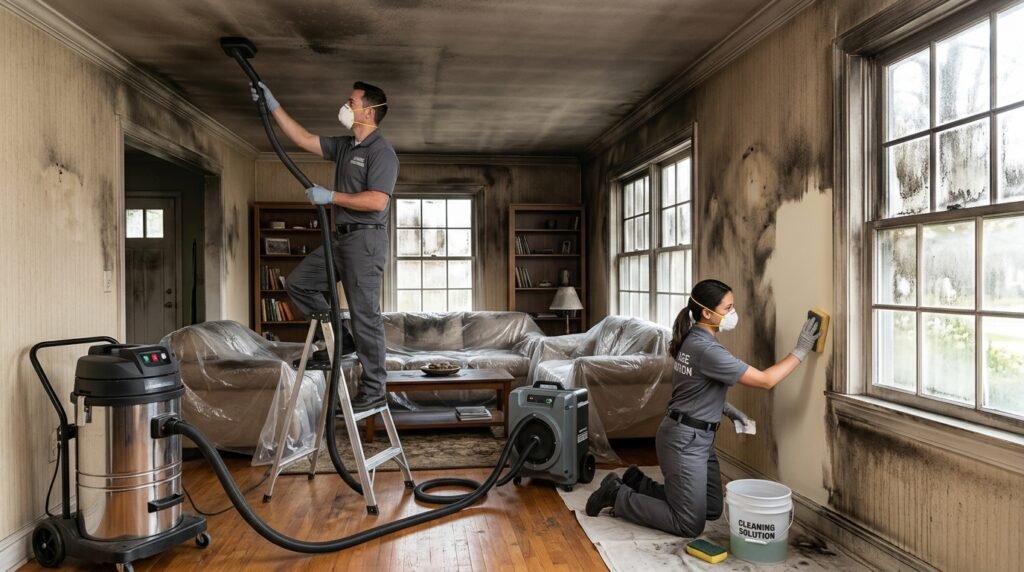
Smoke damage restoration may include HEPA vacuuming, soot removal, surface cleaning, contents cleaning, air filtration, odor treatment, duct cleaning, and material replacement.
The correct cleaning method depends on the type of fire, the materials that burned, and the surfaces affected.
Professional restoration can help determine which items can be cleaned and which materials must be removed.
Be Patient With the Process
Smoke damage is often more extensive than it first appears. Odor can remain inside porous materials, and residue may be hidden behind walls or above ceilings.
Cleaning only the visible stains may not solve the entire problem. A thorough restoration process may take several stages to achieve lasting results.
Experiencing smoke damage can be emotionally exhausting, but homeowners do not have to manage every step alone. Focus on safety, document the property, avoid improper cleaning, and request professional help as soon as possible.
Taking prompt action can help prevent permanent staining, corrosion, recurring odors, and additional damage throughout the home.
Hidden Smoke Damage Inside Your Home
Smoke can move through a home in ways that are difficult to see. Even when a fire is limited to one room, smoke particles may travel through vents, electrical outlets, gaps around pipes, attic spaces, closets, and wall cavities.
This hidden contamination can create lingering odors, discoloration, corrosion, and indoor air quality concerns. Homeowners should not assume that a room is unaffected simply because it does not have visible soot marks.
Understanding where smoke damage hides can help ensure that the property is cleaned thoroughly.
Smoke Inside Wall Cavities
Walls may look clean from the outside while smoke residue remains inside. Smoke can enter through outlets, light switches, plumbing openings, and small cracks.
Once inside the wall cavity, particles may settle on framing, insulation, wiring, and the back side of drywall.
This hidden contamination may continue producing odor, especially during warm or humid weather.
Painting the wall surface will not solve smoke residue trapped behind it. In severe cases, sections of drywall or insulation may need to be removed.
Smoke in Attics and Insulation
Smoke naturally rises, which makes attics especially vulnerable. Soot can settle on roof framing, insulation, stored belongings, wiring, and ventilation components.
Insulation is highly porous and can absorb odors deeply. Depending on the severity of the contamination, it may be difficult or impossible to clean.
An attic inspection is important even when the fire occurred on a lower level of the home.
Contamination in the HVAC System
Heating and cooling systems can collect and distribute smoke particles. Soot may settle inside vents, ductwork, filters, coils, and mechanical equipment.
Running the system before it is inspected may spread contamination throughout the property.
A professional assessment can determine whether the ducts need cleaning and whether filters or damaged components must be replaced.
Smoke Beneath Flooring
Smoke particles can settle in carpet, padding, gaps between floorboards, and areas beneath baseboards.
Carpet and upholstery may hold odor even after the surface has been cleaned. Hardwood floors may collect soot between boards or along edges.
When smoke residue reaches the subfloor, odor may return after ordinary cleaning. Professional deodorization or material removal may be necessary.
Smoke Inside Cabinets and Closets
Closed cabinets and closets are not always protected from smoke. Fine particles can enter through small gaps and settle on shelves, clothing, dishes, food packaging, and personal belongings.
Cabinets may need to be emptied and cleaned on all interior surfaces. Porous items stored inside may require separate treatment.
Food exposed to smoke, heat, or firefighting chemicals should not be consumed.
Smoke Damage to Electronics
Computers, televisions, appliances, gaming systems, and other electronic devices may collect soot internally.
Soot can conduct electricity and contribute to corrosion. Turning on contaminated devices may cause additional damage.
Electronics should be inspected before use. Some may be professionally cleaned, while others may require replacement.
Smoke in Furniture and Fabrics
Upholstery, mattresses, curtains, rugs, and clothing absorb smoke easily. Odor may remain deep inside fibers and padding.
Standard washing methods may not fully remove the contamination. In some cases, washing smoke-damaged fabric without pretreatment can set stains or odors.
Professional textile and contents cleaning may improve the chance of restoration.
Why Odors Return
Some homeowners notice that smoke odor becomes stronger when the weather is warm or humid. Heat and moisture can release odor molecules trapped inside porous materials.
Air fresheners and scented sprays may temporarily cover the smell, but they do not remove the source.
Lasting odor treatment requires identifying and cleaning the contaminated materials.
Professional Detection Methods
Restoration professionals inspect the home room by room and may use air filtration, odor assessment, surface testing, and detailed visual inspection.
They examine areas that are commonly overlooked, including attics, closets, ducts, cabinets, wall openings, and flooring edges.
Smoke damage is not always visible, but it can continue affecting the home if left untreated. A thorough inspection helps identify hidden contamination and determine which surfaces can be cleaned, sealed, or replaced.
Addressing these hidden areas is essential for restoring the property safely and preventing recurring smoke odors.