After a house fire, homeowners may feel uncertain about how the property can be cleaned, repaired, and made safe again. Fire damage restoration involves much more than removing burned materials. It is a complete process designed to address fire, smoke, soot, odors, water damage, structural concerns, and damaged belongings.
Knowing what to expect can make the recovery process feel less confusing.
Emergency Inspection and Safety Assessment
The restoration process begins with an inspection of the property. Professionals evaluate the affected areas, identify safety hazards, and determine the extent of fire, smoke, soot, and water damage.
The assessment may include checking the roof, walls, ceilings, floors, electrical systems, plumbing, HVAC components, and structural framing.
Homeowners should not enter the property until authorities confirm that it is safe. Even small fires can weaken materials or create hidden electrical and structural hazards.
Emergency Board-Up and Roof Protection
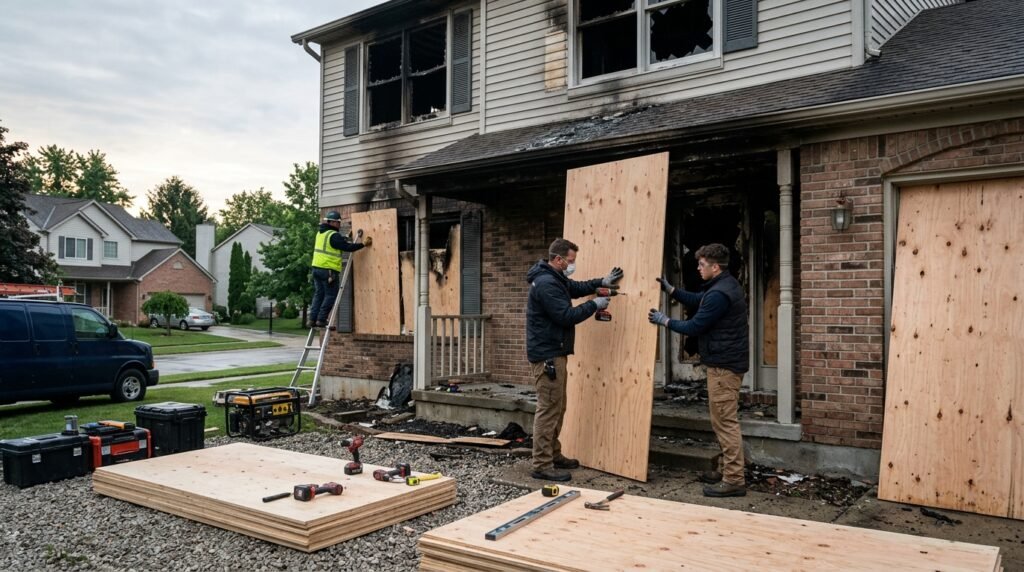
Fires may damage windows, doors, walls, and roofing materials. Open areas leave the property vulnerable to rain, wind, animals, vandalism, and additional deterioration.
Emergency board-up services cover broken windows and damaged openings. Roof tarping may be used when fire or firefighting activities have left the roof exposed.
These temporary protections help secure the building until permanent repairs can begin.
Water Removal and Structural Drying
Water damage is common after a fire because firefighters may use significant amounts of water to control the flames. Plumbing systems may also be damaged during the incident.
Restoration teams remove standing water using extraction equipment. They then use air movers, dehumidifiers, and moisture monitoring tools to dry affected walls, flooring, ceilings, and structural materials.
Drying is an essential step because moisture can lead to mold growth, odors, damaged flooring, and weakened building materials.
Removal of Unsafe Materials
Some materials may be too damaged to clean or repair. Burned drywall, insulation, flooring, cabinetry, roofing, and structural components may need to be removed.
Controlled demolition allows restoration professionals to access hidden areas and remove materials that could create safety, odor, or contamination problems.
Whenever possible, unaffected materials are protected and preserved.
Smoke and Soot Cleaning
Smoke and soot can spread throughout the home, even into rooms that were not directly touched by flames. The cleaning method depends on the type of fire, the materials that burned, and the surfaces affected.
Professionals may use specialized vacuums, dry-cleaning sponges, chemical cleaners, ultrasonic cleaning, air filtration devices, and other restoration methods.
Walls, ceilings, cabinets, floors, windows, fixtures, furniture, and personal belongings may all require different cleaning techniques.
Smoke Odor Removal
Smoke odor can remain inside porous materials such as drywall, wood, carpeting, upholstery, insulation, and clothing. Standard cleaning products and air fresheners usually only cover the smell temporarily.
Professional odor removal may involve air scrubbing, thermal fogging, hydroxyl treatment, ozone treatment, surface sealing, and removal of contaminated materials.
The correct treatment depends on the severity of the odor and the materials affected.
Contents Cleaning and Restoration
Not every fire-damaged item must be discarded. Furniture, clothing, documents, electronics, photographs, dishes, and personal belongings may be restorable.
Items are carefully evaluated, documented, packed, cleaned, deodorized, and stored when necessary. This process is often referred to as a contents pack-out.
Sentimental belongings may require special handling. Although not every item can be saved, professional restoration methods can recover more than many homeowners expect.
Repairs and Reconstruction
Once the property is clean, dry, and safe, repairs can begin. Reconstruction may include replacing drywall, flooring, insulation, cabinets, roofing, doors, windows, electrical components, and structural framing.
Minor fire damage may require only limited repairs, while a severe fire may involve extensive reconstruction.
The goal is not only to improve the appearance of the home but also to restore its safety, function, and structural integrity.
Final Inspection
Before the restoration is considered complete, the property should receive a final inspection. Professionals check completed repairs, moisture levels, odor conditions, cleanliness, safety concerns, and overall workmanship.
Homeowners should walk through the property, ask questions, and make sure they understand any maintenance or follow-up recommendations.
Recovering from a fire can be emotionally exhausting, but understanding the restoration process can provide clarity. Each step, from emergency protection to final reconstruction, is designed to help homeowners move from a damaged property toward a safe and comfortable home again.