Water damage can happen suddenly and create serious problems throughout a home or commercial property. A broken pipe, overflowing appliance, roof leak, backed-up drain, storm, or plumbing failure can release water into floors, walls, ceilings, cabinets, and other structural areas. Even when the visible water appears limited, moisture may continue spreading into hidden spaces.
Professional water damage restoration helps control the damage, remove moisture, clean affected areas, and restore the property to a safe and functional condition. At SOS Restoration of Santa Clara County, we understand that water-related emergencies require a fast and organized response.
What Is Water Damage Restoration?
Water damage restoration is the process of inspecting, drying, cleaning, and repairing a property after water intrusion. It involves more than simply removing standing water. Moisture can become trapped beneath flooring, behind drywall, inside insulation, and around structural materials.
A complete restoration process may include:
- Water extraction
- Moisture detection
- Structural drying
- Dehumidification
- Cleaning and sanitizing
- Odor control
- Removal of damaged materials
- Repairs and reconstruction
The goal is to address both visible and hidden damage before it develops into a larger issue.
Common Causes of Water Damage
Water damage can result from many different situations. Some incidents occur unexpectedly, while others develop slowly over time.
Broken or Leaking Pipes
A damaged plumbing pipe can release a significant amount of water into a property. Pipes may break because of corrosion, loose connections, pressure problems, age, or accidental damage.
Even a small leak can cause extensive deterioration if it remains undetected behind a wall or beneath a floor.
Appliance Malfunctions
Washing machines, dishwashers, refrigerators, and water heaters depend on hoses, connections, and drainage systems. When these components fail, water can spread quickly into nearby rooms.
Laundry rooms and kitchens are especially vulnerable because water may travel under cabinets, flooring, and appliances before being noticed.
Roof and Ceiling Leaks
Roof damage, missing materials, clogged drainage systems, or damaged flashing can allow rainwater to enter a property. Ceiling stains may be the first visible warning, but the moisture may already be affecting insulation, framing, or drywall.
Plumbing Overflows
Overflowing sinks, toilets, showers, and bathtubs can cause water to enter flooring and adjacent rooms. When the water contains contaminants, specialized cleaning and sanitizing may be necessary.
Storm and Weather Damage
Heavy rain and severe weather can cause roof leaks, window leaks, drainage problems, and water intrusion around doors or foundations. Rapid response is important because storm-related moisture can affect multiple parts of the property at the same time.
Why Water Damage Requires Immediate Attention
Delaying restoration can allow water to spread farther and affect additional materials. Drywall can weaken, wood can swell, flooring can separate, and insulation can lose its effectiveness.
Moisture can also create conditions that support microbial growth. Damp materials should be evaluated and dried as soon as possible to reduce the risk of additional property damage.
Fast action may also help preserve materials that could otherwise require removal. When restoration begins early, technicians can identify affected areas, remove standing water, and begin controlled drying before moisture continues moving throughout the structure.
Signs You May Need Water Damage Restoration
Not every water problem includes a visible flood. Some damage remains hidden behind walls, under floors, or above ceilings.
Common warning signs include:
- Water stains on walls or ceilings
- Peeling, bubbling, or discolored paint
- Warped or buckled flooring
- Soft drywall or ceiling materials
- Damp or musty odors
- Visible moisture around baseboards
- Swollen cabinets or wood trim
- Unexplained increases in indoor humidity
- Dripping or running water sounds
- Recent plumbing, appliance, or roof problems
These signs should not be ignored. A professional moisture inspection can help determine how far the water has traveled.
The Water Damage Restoration Process
Every water damage situation is different, but a professional restoration project generally follows a structured process.
1. Inspection and Damage Assessment
The first step is identifying the source of the water and evaluating the affected areas. Restoration professionals inspect visible damage and use moisture-detection equipment to find water that may be hidden.
The assessment helps determine which materials can be dried and which materials may need to be removed.
2. Water Extraction
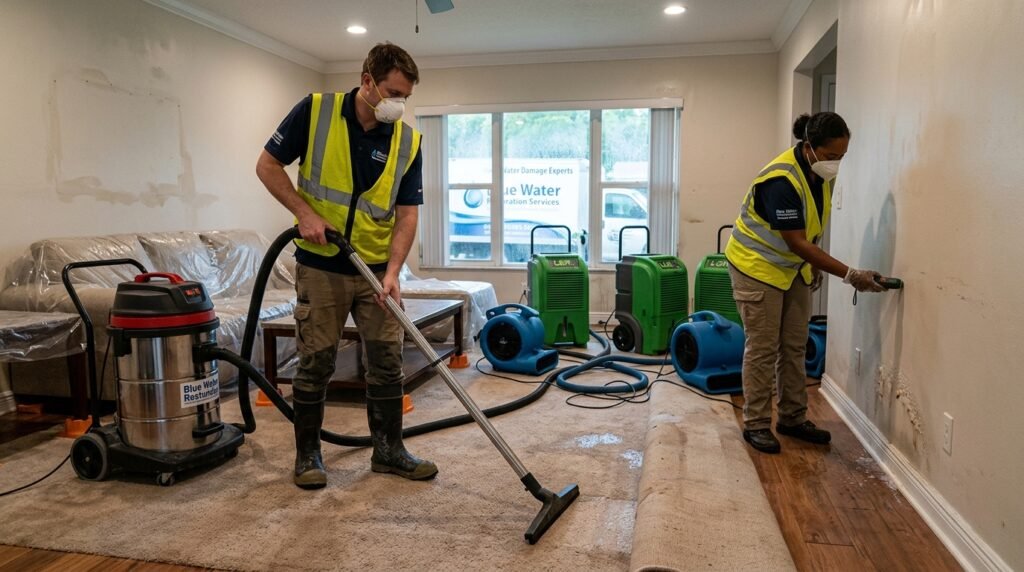
If standing water is present, it should be removed as quickly as possible. Professional extraction equipment can remove large amounts of water from floors, carpets, and other surfaces.
Removing excess water helps prepare the property for the drying stage.
3. Removal of Unsalvageable Materials
Some materials may be too damaged or contaminated to restore safely. These materials may include sections of drywall, insulation, flooring, padding, or cabinetry.
Careful removal allows technicians to access wet structural areas and improve airflow during drying.
4. Structural Drying and Dehumidification
After extraction, professional air movers and dehumidifiers are placed throughout the affected area. These systems help remove moisture from building materials and the surrounding air.
Drying is monitored carefully because a surface may feel dry while moisture remains inside walls, floors, or framing.
5. Cleaning and Sanitizing
Water-damaged areas may require professional cleaning, depending on the source and category of the water. Surfaces and affected contents may be cleaned, sanitized, and treated to help control odors.
6. Repairs and Restoration
The final stage involves repairing the damaged areas and returning the property to a functional condition. This may include replacing drywall, flooring, insulation, baseboards, paint, or other building materials.
The extent of the repairs depends on the severity of the original water damage.
Why Professional Equipment Makes a Difference
Household fans and basic cleaning tools are often not enough to address water that has entered structural materials. Professional restoration equipment is designed to locate moisture, extract water, control humidity, and dry affected areas efficiently.
Moisture meters, thermal imaging devices, commercial air movers, dehumidifiers, and extraction systems allow restoration technicians to evaluate and manage the drying process more accurately.
Without proper moisture detection, hidden water may remain inside the property and continue causing damage after the visible areas appear dry.
Protecting Your Property After Water Damage
After the immediate problem has been addressed, property owners should identify why the water damage occurred and take steps to reduce the chance of another incident.
Helpful preventive measures may include:
- Inspecting plumbing connections regularly
- Replacing worn appliance hoses
- Maintaining the roof and drainage systems
- Checking around windows and doors for leaks
- Monitoring water heaters for corrosion
- Addressing slow drains and recurring backups
- Repairing minor leaks before they become larger
- Knowing where the main water shutoff valve is located
Routine maintenance cannot prevent every emergency, but it can help identify potential problems early.
Contact SOS Restoration of Santa Clara County
Water damage can disrupt your property and create serious concerns if moisture is not removed properly. A fast response can help limit the affected area, support effective drying, and reduce the risk of additional structural damage.
SOS Restoration of Santa Clara County provides professional water damage restoration services for homes and businesses. Our team evaluates the damage, removes water, dries affected materials, cleans impacted areas, and helps restore the property.
When water damage occurs, do not wait for the moisture to disappear on its own. Contact SOS Restoration of Santa Clara County for prompt and professional water damage restoration assistance.