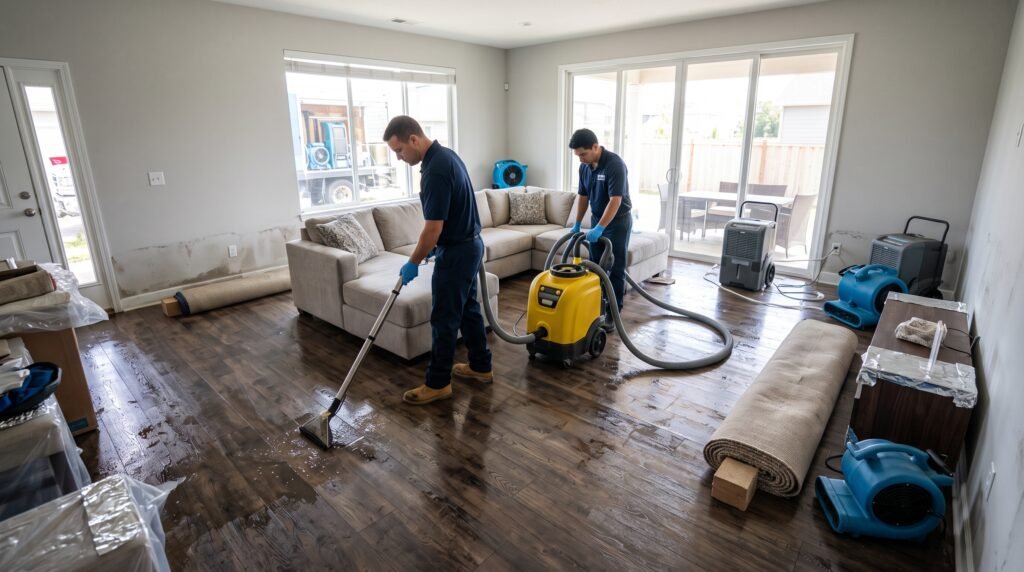
After a water emergency, many homeowners worry that everything in the affected area will need to be thrown away. Wet flooring, drywall, furniture, cabinets, and personal belongings may look severely damaged immediately after the incident.
However, not every wet material automatically requires replacement. Some items can be dried, cleaned, and restored when the water damage is addressed quickly.
The decision depends on several factors, including the source of the water, how long the materials remained wet, the type of material, and the extent of the damage.
The Source of the Water Matters
Restoration professionals first consider where the water came from.
Water from a broken supply line may be relatively clean at the beginning. Materials exposed to this water may have a better chance of being restored when treatment begins quickly.
Water from washing machines, dishwashers, toilets, sewage systems, or outdoor flooding may contain contaminants. Items exposed to contaminated water often require more intensive cleaning, sanitizing, or removal.
Highly porous materials affected by sewage or floodwater may not be safe to preserve.
How Long Was the Material Wet?
Time is a major factor in determining whether something can be saved.
Materials treated shortly after the water damage may respond well to professional extraction and drying. When moisture remains for an extended period, materials can swell, weaken, separate, stain, or develop mold.
The longer restoration is delayed, the less likely certain porous materials can be restored successfully.
Can Wet Drywall Be Saved?
Drywall can sometimes be dried when the water is clean, the damage is limited, and the material has not lost its structural strength.
However, drywall may require removal if it is soft, swollen, crumbling, contaminated, or showing signs of mold. Wet insulation behind the drywall must also be evaluated.
Professionals use moisture meters to determine whether water has moved beyond the visible stain. Removing only the visibly damaged section may leave hidden moisture inside the wall.
Can Hardwood Flooring Be Restored?
Hardwood flooring may be restorable when water extraction and drying begin quickly.
Specialized drying systems can sometimes remove moisture from the boards and subfloor. The flooring may need additional time to return to a stable moisture level before repairs or refinishing begin.
Severely warped, cracked, contaminated, or separated boards may require replacement. Homeowners should avoid immediately removing hardwood because some changes may improve during controlled drying.
What About Laminate Flooring?
Laminate flooring is generally more difficult to restore. Its inner layers may absorb moisture, swell, and separate.
Even when the surface appears normal, water may remain beneath the flooring. Damaged laminate often requires removal so the subfloor can be inspected and dried.
The condition of each area must be evaluated individually.
Can Carpet Be Saved?
Carpet may sometimes be cleaned and dried after limited exposure to clean water. The padding underneath is more absorbent and may need to be removed.
Carpet exposed to sewage, outdoor flooding, or other contaminated water often requires replacement because it can hold bacteria and harmful residue.
Odors, staining, delamination, and mold growth may also affect whether the carpet can be restored.
Cabinets and Wood Furniture
Solid wood cabinets and furniture may be dried and repaired depending on the extent of the damage.
Particleboard and fiberboard materials absorb water quickly and may swell, crumble, or lose their shape. Once these materials become severely damaged, replacement may be the safest option.
Cabinets should be inspected beneath the base and behind the back panels because moisture can remain hidden in these areas.
Upholstered Furniture and Mattresses
Upholstered furniture can absorb water deep inside cushions, fabric, and internal materials.
Restoration may be possible after clean water exposure, but contamination, mold, odors, or prolonged moisture can make replacement necessary.
Mattresses exposed to significant water or contamination are often difficult to clean and dry completely. Professional evaluation is recommended before continued use.
Documents and Photographs
Wet documents, photographs, books, and important papers may be restorable. Specialized drying and document recovery methods can reduce additional damage.
Do not pull wet photographs apart or place them in direct heat. Handle them carefully and request professional advice as soon as possible.
Important documents may also have digital copies available through banks, government agencies, insurance providers, or other organizations.
Electronics and Appliances
Electronics exposed to water should not be turned on. Moisture may cause short circuits, corrosion, or permanent internal damage.
A qualified technician should inspect computers, televisions, appliances, and other devices before use. Even when the exterior looks dry, internal components may still contain moisture.
Why Professional Evaluation Is Helpful
Homeowners may have difficulty determining what is wet beneath the surface. A floor can feel dry while the subfloor remains damp. A cabinet may look undamaged while water is trapped behind it.
Restoration professionals use moisture detection equipment to evaluate hidden areas. They consider safety, contamination, material condition, and the likelihood of successful drying.
The goal is to save materials whenever it is safe and practical while removing items that could create future problems.
Water damage does not always mean that every affected item must be replaced. Quick action and proper drying can preserve many building materials and belongings.
Homeowners should avoid making immediate decisions based only on appearance. Document the damage, keep damaged items for insurance review, and allow qualified professionals to evaluate what can be cleaned, dried, repaired, or safely restored.