Water damage does not always end when the visible water disappears. After a plumbing leak, roof problem, appliance failure, or flood, moisture may remain trapped inside walls, beneath flooring, behind cabinets, or above ceilings. When damp materials are not dried completely, hidden mold can begin to develop.
Hidden mold is difficult to manage because it may grow for an extended period before becoming visible. Property owners may notice a musty odor, recurring stains, or damaged building materials without realizing that mold is present inside a concealed area.
Professional mold removal and remediation helps locate the affected materials, control the work area, remove contamination, dry the structure, and restore the damaged space. SOS Restoration of Santa Clara County provides mold remediation services for residential and commercial properties affected by moisture and hidden mold growth.
Why Mold Often Appears After Water Damage
Mold requires moisture and a suitable material to grow. Many common building materials can retain water and support mold when they remain damp.
These materials include:
- Drywall
- Wood framing
- Insulation
- Carpet and padding
- Ceiling tiles
- Cabinet materials
- Wallpaper
- Subflooring
- Paper products
- Fabric
After a water incident, the visible surfaces may dry while deeper layers remain wet. For example, the top of a floor may feel dry even though moisture is still present in the padding or subfloor beneath it.
The longer moisture remains, the greater the chance that mold will affect surrounding materials.
Where Hidden Mold Commonly Develops
Mold can grow in any area where moisture remains trapped or airflow is limited. Certain locations are especially vulnerable after water damage.
Inside Wall Cavities
Water from a leaking pipe, roof problem, or bathroom overflow can enter a wall cavity. Because the area is enclosed, moisture may remain around drywall, insulation, and wood framing.
Mold inside walls may not become visible until paint begins peeling or discoloration appears.
Beneath Flooring
Carpet, laminate, hardwood, vinyl, and tile can hide moisture beneath the finished surface. Water may spread through padding, adhesive, underlayment, and subflooring.
Mold beneath flooring may create odors, discoloration, lifting, or soft areas.
Behind Cabinets
Kitchen and bathroom cabinets can conceal leaks from sinks, dishwashers, refrigerators, and supply lines. The enclosed space behind a cabinet receives limited airflow, allowing dampness to remain for longer periods.
Above Ceilings
Roof leaks, plumbing lines, and upper-floor overflows can introduce water into ceiling cavities. Moisture may affect ceiling drywall, insulation, joists, and nearby walls.
Around HVAC Systems
Condensation, damaged drain lines, or excess humidity around heating and cooling equipment can contribute to mold growth. Moisture may also affect nearby ducts, ceilings, or insulation.
Attics and Crawl Spaces
These areas may experience roof leaks, foundation moisture, poor ventilation, and condensation. Because they are not inspected frequently, mold may spread before it is discovered.
Signs That Hidden Mold May Be Present
Visible mold is not always the first warning sign. Property owners should pay attention to changes that suggest moisture or contamination behind finished surfaces.
Common signs include:
- Persistent musty odors
- Water stains that return
- Peeling or bubbling paint
- Warped flooring
- Soft drywall
- Swollen baseboards
- Discolored ceilings
- Damp cabinets
- Unexplained indoor humidity
- Recurring condensation
- Previous water damage
- Dark staining near plumbing fixtures
A musty odor is especially important. When the smell remains after cleaning, mold may be present in a concealed material or enclosed cavity.
Why Hidden Mold Should Be Addressed Quickly
Hidden mold may continue spreading while the source remains active. It can affect larger areas of drywall, wood, insulation, and flooring over time.
Delaying remediation may result in:
- Additional material damage
- Larger removal areas
- Persistent odors
- Staining and surface deterioration
- Damage to flooring and cabinetry
- Moisture moving into adjacent rooms
- More extensive repairs
Early inspection can help define the affected area before the damage expands.
Why Painting Over Mold Does Not Work
Painting over stains may temporarily improve the appearance of a wall or ceiling, but it does not remove mold or trapped moisture.
When paint is applied over damp or contaminated materials, the surface may begin peeling, bubbling, or staining again. Mold may continue growing behind the new finish.
The moisture source must be corrected, affected materials must be evaluated, and the area must be cleaned and dried before cosmetic repairs begin.
How Professionals Locate Hidden Mold
A professional inspection looks beyond the visible surface. Restoration technicians evaluate the history of water damage, the location of plumbing and appliances, and the condition of surrounding materials.
Tools may be used to identify elevated moisture in:
- Walls
- Floors
- Ceilings
- Cabinets
- Baseboards
- Framing
- Subflooring
- Insulation
Moisture meters and thermal imaging equipment can help identify areas that require closer inspection.
The goal is to avoid unnecessary demolition while locating materials that are still wet or affected.
The Mold Removal and Remediation Process
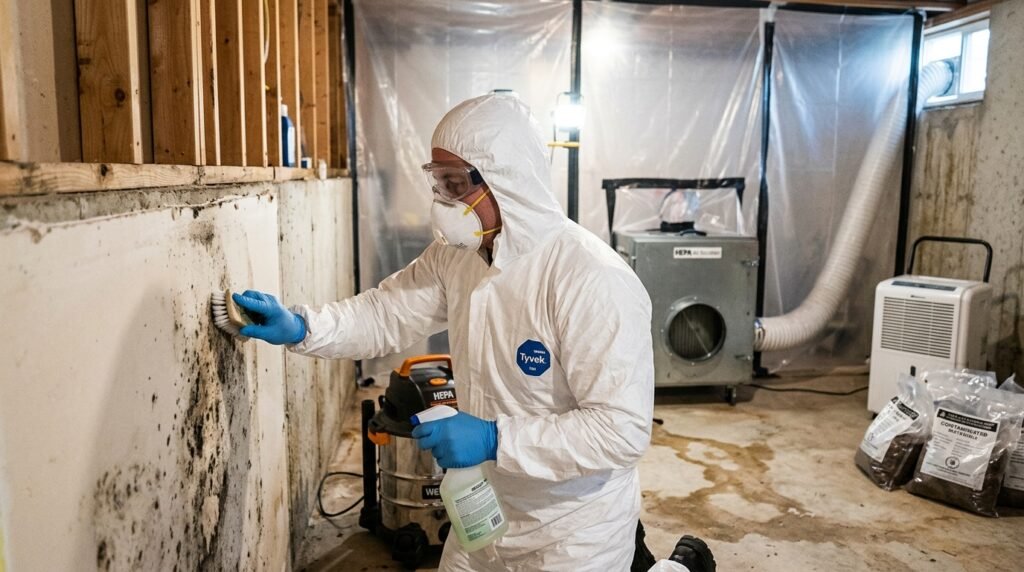
Hidden mold remediation requires a controlled approach. Opening walls or removing flooring without containment may spread dust and particles into other areas.
1. Initial Assessment
The property is inspected to determine the likely source of moisture and the extent of the affected area.
The assessment may include visible surfaces, concealed spaces, nearby rooms, and materials that share the same plumbing or structural system.
2. Moisture Source Correction
The leak, drainage problem, condensation issue, or other moisture source must be corrected.
Possible repairs may involve:
- Plumbing lines
- Roof materials
- Appliance connections
- Bathroom seals
- HVAC drain systems
- Window or door leaks
- Exterior drainage
Remediation will not provide a lasting result if the source continues introducing moisture.
3. Containment
Containment separates the affected area from the rest of the property. Barriers may be placed around the work zone, and vents or openings may be sealed.
Controlled access helps reduce the movement of dust and particles during material removal.
4. Air Filtration
Professional air filtration equipment may operate inside the contained area. HEPA filtration helps capture airborne particles released during cleaning and demolition.
5. Accessing Hidden Areas
Sections of drywall, flooring, baseboards, or cabinetry may need to be removed to reach concealed mold.
Removal should be targeted based on the inspection and moisture readings. The objective is to expose the affected materials without creating unnecessary damage.
6. Removing Unsalvageable Materials
Heavily affected porous materials may not be suitable for cleaning.
These materials may include:
- Drywall
- Insulation
- Carpet padding
- Ceiling tiles
- Wallpaper
- Composite wood
- Damaged baseboards
- Saturated flooring materials
Removed materials should be handled carefully to prevent contamination from spreading outside the work area.
7. Cleaning Salvageable Surfaces
Wood framing, concrete, and other materials that remain structurally sound may be cleaned using professional remediation methods.
Cleaning may include:
- HEPA vacuuming
- Detailed wiping
- Surface scrubbing
- Controlled abrasion
- Removal of dust and residue
- Odor treatment
The cleaning method depends on the surface and the extent of contamination.
8. Structural Drying
After removal and cleaning, the affected materials must be dried thoroughly.
Air movers and dehumidifiers may be used to reduce moisture in framing, subflooring, walls, and indoor air.
Technicians monitor moisture levels throughout the process. Repairs should not begin until the structure is adequately dry.
9. Restoration
Once remediation is complete, the damaged area can be rebuilt.
Restoration may involve:
- New drywall
- Insulation replacement
- Flooring repairs
- Cabinet repairs
- Baseboard installation
- Ceiling restoration
- Painting
- Texture matching
The final stage returns the affected space to a clean and functional condition.
Mold After Plumbing Leaks
Slow plumbing leaks are a common source of hidden mold. A small leak beneath a sink or behind a wall may not produce visible standing water.
Signs may include swollen cabinets, staining, odors, or soft wall materials.
Plumbing areas should be inspected regularly, especially around:
- Sinks
- Toilets
- Showers
- Bathtubs
- Water heaters
- Washing machines
- Refrigerators
- Dishwashers
Addressing a small leak early may prevent extensive mold growth.
Mold After Roof Leaks
Roof leaks can affect attics, ceilings, walls, and insulation. Water may travel along framing before becoming visible inside a room.
A ceiling stain may be located far from the original entry point.
After roof damage, the interior materials should be inspected and dried. Repairing the roof alone may not resolve moisture already trapped inside the structure.
Mold After Appliance Failures
Appliance leaks often affect areas beneath flooring or behind cabinets. Washing machines, dishwashers, refrigerators, and water heaters can release water when hoses, seals, or valves fail.
Because appliances block visibility and airflow, moisture can remain hidden for an extended period.
Preventing Hidden Mold After Water Damage
The best way to reduce mold risk is to address water damage quickly and verify that all affected materials are dry.
Helpful steps include:
- Repairing leaks immediately
- Removing standing water
- Inspecting nearby rooms
- Drying flooring and wall cavities
- Replacing saturated materials
- Monitoring indoor humidity
- Maintaining bathroom ventilation
- Checking appliance hoses
- Inspecting the roof after storms
- Investigating musty odors
- Monitoring areas with previous water damage
A surface that appears dry should not be assumed to be dry internally.
Professional Mold Removal and Remediation in Santa Clara County
Hidden mold can develop after water damage even when the property appears dry. Moisture may remain inside walls, beneath floors, behind cabinets, or above ceilings, allowing contamination to spread through concealed materials.
SOS Restoration of Santa Clara County provides professional mold removal and remediation for homes and businesses. Our team helps locate hidden moisture, establish containment, remove affected materials, clean salvageable surfaces, dry the structure, and prepare the area for repairs.
When you notice musty odors, recurring stains, warped materials, or other signs of hidden moisture, do not wait for visible mold to appear. Contact SOS Restoration of Santa Clara County for a professional mold assessment and complete remediation service.