Mold can appear after a leak, flood, roof problem, plumbing failure, or long period of high indoor humidity. At first, the affected area may seem small enough to clean with household products. However, visible mold is often only one part of the problem.
Mold can spread beneath flooring, behind drywall, inside cabinets, above ceilings, and through other hidden parts of a property. Cleaning only the surface may improve the appearance temporarily while leaving contaminated materials and moisture behind.
Professional mold removal and remediation is designed to identify the full extent of the problem, contain affected areas, remove damaged materials, clean salvageable surfaces, and correct the conditions that allowed mold to grow.
SOS Restoration of Santa Clara County provides professional mold removal and remediation for residential and commercial properties. A structured remediation process helps reduce the risk of spreading contamination and supports a more complete restoration.
Why Mold Is More Complicated Than It Looks
Mold develops when moisture remains on materials that can support growth. Drywall, wood, insulation, carpet, paper, and ceiling tiles are common examples.
A small patch of mold on a wall may indicate moisture behind the surface. The visible growth may be connected to a leaking pipe, damaged roof, condensation problem, or an area that was not dried properly after previous water damage.
This makes mold cleanup more complicated than wiping or spraying the affected area.
The Problem With Surface Cleaning
Household cleaning products may remove staining from some nonporous surfaces, but they may not penetrate porous materials. Drywall, insulation, carpet padding, and composite wood can hold moisture and contamination internally.
When only the visible surface is cleaned, mold may remain behind or inside the material.
Common signs that surface cleaning did not solve the problem include:
- Mold returning in the same location
- Musty odors that remain after cleaning
- New discoloration around the original area
- Paint or drywall continuing to deteriorate
- Moisture appearing beneath flooring
- Recurring condensation
- Growth spreading to nearby surfaces
A recurring problem usually indicates that the moisture source or contaminated material was not fully addressed.
How DIY Cleaning Can Spread Mold
Scrubbing, sanding, cutting drywall, removing carpet, or opening walls can disturb mold-affected materials. This disturbance can release dust and particles into the surrounding air.
Without containment, those particles may move into nearby rooms through:
- Open doorways
- Air circulation
- Heating and cooling systems
- Clothing and shoes
- Cleaning tools
- Fans
- Improper debris handling
Using a regular household fan near mold can make the situation worse by spreading particles beyond the original area.
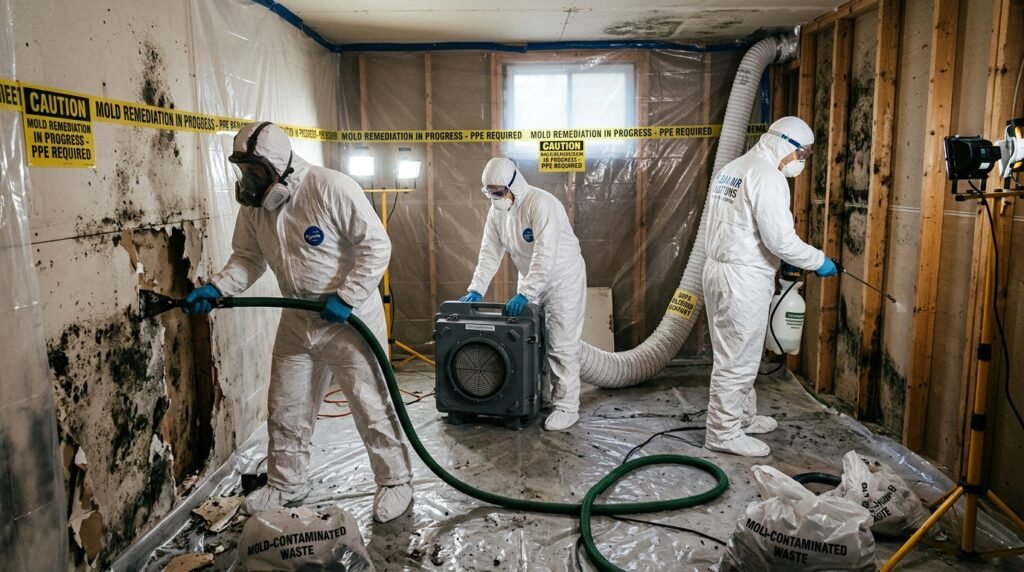
Professional remediation uses controlled work zones and specialized equipment to help limit this movement.
Why Containment Matters
Containment separates the affected area from the rest of the property during removal and cleaning.
Depending on the size and location of the problem, containment may include:
- Plastic barriers
- Covered doors and openings
- Sealed vents
- Controlled access points
- Negative air pressure
- Air filtration equipment
Containment is especially important when mold is found behind drywall, under flooring, inside insulation, or in other areas that require demolition.
Without containment, contamination from one room may be carried into spaces that were previously unaffected.
Hidden Mold Behind Walls
Mold behind drywall often develops because of plumbing leaks, roof leaks, condensation, or water intrusion from another room.
The first warning sign may be a stain, soft drywall, peeling paint, or musty odor. In some cases, no visible mold appears on the finished wall.
Professional moisture detection can help locate damp areas before opening large sections of the wall.
Once the affected section is accessed, technicians can inspect framing, insulation, pipes, and surrounding materials to determine what should be removed or cleaned.
Opening walls without a plan may spread contamination and expose additional damage.
Mold Beneath Flooring
Flooring can hide moisture for long periods. Water may become trapped beneath carpet, laminate, hardwood, tile, or vinyl.
Possible signs of mold beneath flooring include:
- Buckling or lifting
- Discoloration
- Soft sections
- Musty odors
- Warped boards
- Loose tiles
- Damp carpet padding
- Repeated moisture near baseboards
Removing flooring without containment can release dust and expose contaminated subflooring.
Professional remediation evaluates both the finished flooring and the layers below it.
Mold in Bathrooms and Kitchens
Bathrooms and kitchens are common locations for mold because they contain plumbing, water fixtures, steam, and enclosed cabinets.
In bathrooms, mold may develop around showers, tubs, toilets, vanities, ceilings, and exhaust vents.
In kitchens, it may appear under sinks, behind dishwashers, near refrigerators, or inside cabinets.
Cleaning visible growth is not enough if the problem comes from a hidden pipe or appliance leak.
A successful remediation process must identify and correct the source of moisture.
Mold in Attics and Crawl Spaces
Attics and crawl spaces are frequently overlooked because they are not part of the main living area. However, poor ventilation, roof leaks, foundation moisture, and condensation can create significant mold problems.
Attic mold may affect:
- Roof decking
- Rafters
- Insulation
- Ventilation components
- Stored belongings
Crawl-space mold may affect:
- Floor joists
- Subflooring
- Insulation
- Foundation materials
- Plumbing lines
Because these spaces are difficult to access and ventilate, professional inspection and remediation are often necessary.
The Professional Mold Remediation Process
A professional remediation project follows a controlled series of steps.
Inspection and Assessment
The property is evaluated to identify visible mold, hidden moisture, damaged materials, and the likely source of the problem.
The inspection helps determine the size of the affected area and the type of containment required.
Moisture Source Correction
The leak, condensation issue, roof problem, or other source of moisture must be corrected. Mold is likely to return if moisture continues entering the area.
Containment Setup
The work area is separated from unaffected spaces. Vents, doorways, and openings may be sealed to reduce particle movement.
Air Filtration
HEPA air filtration equipment may be used during removal and cleaning. This helps capture airborne particles within the work area.
Material Removal
Porous materials that are heavily affected or damaged may need to be removed.
These materials can include:
- Drywall
- Insulation
- Carpet padding
- Ceiling tiles
- Composite wood
- Baseboards
- Wallpaper
- Damaged flooring
Surface Cleaning
Salvageable materials are cleaned using methods appropriate for the surface.
This may include HEPA vacuuming, wiping, controlled abrasion, and detailed cleaning of exposed framing.
Drying and Monitoring
The affected area is dried using professional equipment. Moisture levels are monitored to confirm that building materials are ready for repairs.
Restoration
Once remediation is complete, removed materials can be replaced. Repairs may include drywall, insulation, flooring, painting, trim, or cabinetry.
Why Moisture Testing Is Important
A room can appear dry while moisture remains inside walls, flooring, or framing.
Moisture testing helps determine:
- Which materials are still wet
- Whether the affected area is expanding
- Where drying equipment should be placed
- When the structure is ready for repairs
- Whether the moisture source has been corrected
Relying only on appearance may allow hidden dampness to remain.
When to Contact a Professional
Professional mold remediation should be considered when:
- Mold covers a large area
- Growth continues returning
- The source is hidden
- Drywall or insulation is affected
- Water damage was not dried properly
- Mold is beneath flooring
- The area has a strong musty odor
- Contaminated materials must be removed
- Mold is present in an attic or crawl space
- The property is commercial or multifamily
Attempting to handle extensive contamination without the proper controls can make the situation more difficult.
Preventing Mold From Returning
After remediation, moisture control remains essential.
Property owners can reduce future risk by:
- Repairing plumbing leaks quickly
- Maintaining the roof
- Improving bathroom ventilation
- Monitoring indoor humidity
- Cleaning gutters and drainage systems
- Inspecting appliance hoses
- Maintaining HVAC drain lines
- Drying water-damaged areas immediately
- Investigating musty odors
- Checking hidden spaces regularly
Any recurring moisture should be addressed before it develops into a larger problem.
Professional Mold Removal and Remediation in Santa Clara County
Mold cleanup is not simply about removing visible stains. A complete solution requires identifying hidden growth, controlling the affected area, correcting moisture, removing damaged materials, cleaning structural surfaces, and drying the property thoroughly.
SOS Restoration of Santa Clara County provides professional mold removal and remediation for homes and businesses. Our team follows a detailed process to help control contamination, protect unaffected areas, and restore damaged spaces.
When mold keeps returning or appears after water damage, professional action can help address the problem at its source. Contact SOS Restoration of Santa Clara County for dependable mold removal and remediation services.