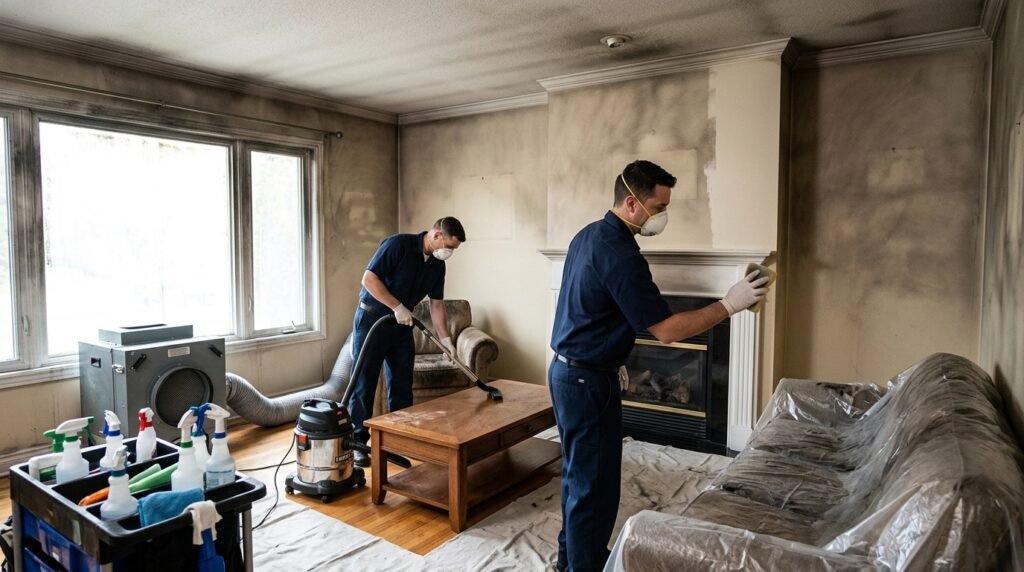
After a fire, homeowners often focus first on walls, ceilings, and structural damage. However, smoke can also affect furniture, clothing, electronics, documents, photographs, and sentimental belongings.
Some items may look undamaged but still contain soot, odor, or chemical residue. Others may appear beyond repair even though professional cleaning could save them.
Understanding how smoke affects different belongings can help homeowners make informed decisions.
Furniture
Wooden furniture can collect soot on the surface and inside joints, drawers, and unfinished areas.
If the finish is damaged by heat or acidic residue, the wood may discolor or corrode around metal hardware.
Upholstered furniture absorbs smoke deeply. Odor can remain inside fabric, cushions, foam, and wooden framing.
Professional cleaning may include HEPA vacuuming, fabric treatment, deodorization, and controlled drying.
Furniture exposed to heavy contamination or water may require replacement.
Clothing and Textiles
Clothing, bedding, curtains, rugs, and other textiles can absorb both soot and odor.
Washing these items immediately in a household washing machine may make the damage worse. Certain detergents and high dryer temperatures can set stains or odor.
Smoke-damaged textiles should be evaluated and pretreated before normal washing.
Professional textile cleaning methods may remove residue while protecting fabric quality.
Mattresses
Mattresses are highly porous and difficult to clean completely.
Smoke, soot, and water can enter deep layers where ordinary cleaning cannot reach.
When contamination is significant, replacement may be recommended.
Homeowners should not continue using a smoke-damaged mattress until it has been evaluated.
Electronics
Smoke particles can enter computers, televisions, appliances, audio equipment, and other devices.
Soot may conduct electricity, cause corrosion, and damage internal components.
Do not turn on electronics after a fire. Powering them on may create a short circuit or permanent failure.
A qualified electronics technician should inspect them before use.
Kitchen Items
Dishes, glassware, cookware, and utensils may be restorable depending on the type of residue and heat exposure.
Food and medicine exposed to smoke, heat, soot, or firefighting chemicals should usually be discarded.
Items with porous surfaces, including certain plastics and wooden utensils, may be difficult to clean safely.
Documents and Books
Books, legal papers, certificates, and personal records may absorb water, soot, and odor.
Handle wet documents carefully because pages can tear easily.
Specialized document restoration may include controlled drying, cleaning, freeze-drying, and deodorization.
Digital replacements may also be available for certain records.
Photographs
Photographs are especially delicate. Wet photos may stick together, and improper handling can permanently damage the image.
Do not separate wet photographs forcefully or apply direct heat.
Professional recovery methods may be able to save valuable or sentimental images.
Artwork and Decorative Items
Paintings, sculptures, frames, and decorative items require individual evaluation.
Heat, soot, water, and cleaning chemicals can affect materials differently.
Artwork should be handled by professionals familiar with conservation and specialty cleaning.
Jewelry and Metal Items
Soot may cause corrosion or discoloration on metal surfaces.
Jewelry, tools, fixtures, and decorative metal objects should be cleaned promptly.
Some items may require specialized polishing or restoration.
Children’s Items and Toys
Toys, stuffed animals, books, and children’s furniture should be evaluated carefully.
Porous toys exposed to heavy smoke or contaminated water may be difficult to clean safely.
Hard, nonporous toys may be restorable with proper cleaning and sanitizing.
The Contents Restoration Process
Restoration professionals typically document each item before moving it.
Belongings may be photographed, inventoried, packed, transported, cleaned, deodorized, and stored.
This process is often called a pack-out.
Homeowners should review the inventory and identify items with special financial or sentimental value.
What Should Be Discarded?
The decision depends on contamination, material type, condition, and safety.
Items exposed to sewage, severe heat, heavy soot, or chemical residue may not be safe to keep.
Food, cosmetics, medicine, and certain porous products often require disposal.
Homeowners should document all discarded items for insurance purposes.
Do Not Make Immediate Decisions
The emotional impact of a fire can make it difficult to decide what to keep.
Avoid throwing away belongings before they have been documented and evaluated.
Some items that look badly damaged may be restorable, while others that look clean may contain hidden contamination.
Smoke damage can affect nearly every belonging inside a home. A careful, item-by-item evaluation gives homeowners the best chance of preserving valuable and sentimental possessions.
Professional cleaning cannot save everything, but it can often restore more than homeowners initially expect.