After water enters a home, many homeowners are unsure what happens next. They may wonder whether the floors can be saved, how long drying will take, or whether mold will develop.
Water damage restoration is a structured process that focuses on stopping the source, removing water, drying the building, cleaning affected areas, and repairing damaged materials.
Understanding each stage can help homeowners feel more informed during a difficult situation.
Emergency Contact and Initial Assessment
The process usually begins with an emergency call and an inspection. Restoration professionals ask questions about the source of the water, the affected rooms, how long the problem has been present, and whether there are safety concerns.
During the inspection, they evaluate visible damage and search for moisture in hidden areas.
The assessment may include flooring, drywall, ceilings, cabinets, insulation, crawl spaces, basements, and personal belongings.
Water Classification
Not all water damage is the same. The level of contamination depends on where the water came from.
Clean water may come from a supply line or overflowing sink. Gray water may contain contaminants from appliances or certain plumbing fixtures. Black water may come from sewage, flooding, or other highly contaminated sources.
The category of water affects the cleaning methods, safety precautions, and materials that may need to be removed.
Stopping the Water Source
Before restoration can continue, the source of the water must be controlled. This may require plumbing repairs, roof repairs, appliance disconnection, or temporary emergency work.
Without stopping the source, extraction and drying will not be effective.
Water Extraction
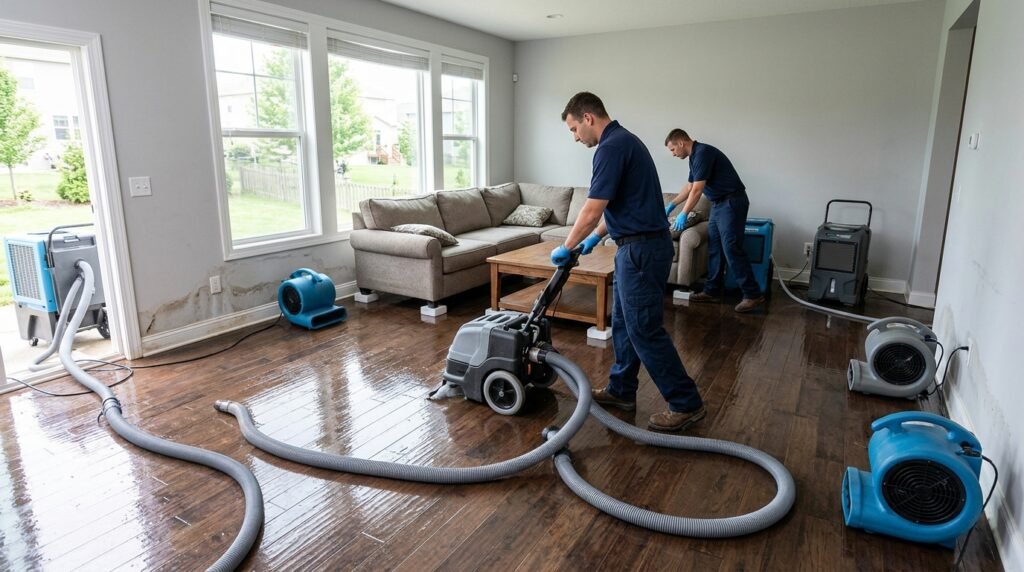
Standing water is removed using pumps and professional extraction equipment. Fast extraction helps reduce the amount of water absorbed by flooring, walls, furniture, and structural materials.
Carpet and padding may require special attention. In some situations, carpet can be cleaned and dried. In others, contaminated or severely damaged materials must be removed.
Removal of Damaged Materials
Certain materials cannot be safely restored after prolonged exposure or contamination. Wet insulation, damaged drywall, swollen particleboard, contaminated carpet padding, and certain flooring materials may need removal.
Removing damaged materials also allows restoration professionals to reach wet areas behind walls or beneath floors.
The goal is to preserve as much of the property as possible while removing materials that could create ongoing problems.
Structural Drying
After water extraction, specialized drying equipment is installed. Air movers increase evaporation, while dehumidifiers remove moisture from the air.
Drying equipment may remain in place for several days depending on the severity of the damage, the materials affected, and environmental conditions.
Professionals use moisture meters to check progress. Equipment should not be removed simply because surfaces feel dry.
Cleaning and Sanitizing
Water damage can leave dirt, bacteria, odors, and residue behind. Affected surfaces may require cleaning, disinfecting, deodorizing, or antimicrobial treatment.
The specific process depends on the water category and the materials involved.
Personal belongings may also be cleaned. Furniture, clothing, documents, rugs, and other items are evaluated to determine whether they can be restored.
Mold Prevention
Prompt drying is one of the most important steps in reducing the risk of mold. However, if the water damage was not discovered quickly, mold may already be present.
Restoration professionals inspect vulnerable areas and recommend mold remediation when necessary.
Simply spraying a wet area with bleach does not guarantee that hidden moisture or mold has been addressed.
Repairs and Reconstruction
Once the property is clean and dry, repairs can begin. This may include replacing drywall, insulation, baseboards, cabinets, flooring, paint, and other building materials.
Minor water damage may require only limited repairs, while severe damage may involve extensive reconstruction.
Final Moisture Inspection
Before restoration is complete, moisture levels should be checked again. The affected areas must be dry enough to prevent future problems.
A final walkthrough also allows homeowners to review the work and ask questions about repairs or ongoing maintenance.
Water damage restoration is not simply about removing visible water. It involves careful inspection, controlled drying, cleaning, documentation, and repairs.
Although the process may feel overwhelming, understanding what to expect can help homeowners make informed decisions and move toward restoring their home safely.
How Water Damage Can Lead to Mold Growth
Water damage and mold are closely connected. When building materials remain wet, mold spores can begin growing and spreading throughout the affected area.
Homeowners often assume mold only appears after major flooding, but even a slow leak behind a wall or beneath a sink can create the right environment for growth.
Understanding how mold develops after water damage can help homeowners respond quickly and protect their property.
Why Mold Grows After Water Damage
Mold needs moisture, organic material, and suitable temperatures to grow. Homes contain many materials that can provide a food source, including drywall paper, wood, carpet, fabric, dust, and insulation.
When these materials become wet and remain damp, mold spores may begin developing.
The process can occur in visible areas, but it is especially common inside wall cavities, beneath flooring, behind cabinets, and in other poorly ventilated spaces.
How Quickly Can Mold Begin?
Mold growth may begin within a relatively short period when conditions are favorable. This does not mean a complete mold infestation will appear immediately, but it does mean water damage should be addressed without unnecessary delay.
The longer materials stay wet, the greater the risk of mold, odors, staining, and structural deterioration.
Quick water extraction and professional drying can significantly reduce these risks.
Common Places Mold Develops
After water damage, mold may appear in:
- Drywall and wall cavities
- Carpet and carpet padding
- Wooden flooring and subfloors
- Cabinets and vanities
- Attics and crawl spaces
- Insulation
- Ceiling materials
- Upholstered furniture
- Stored cardboard and paper
- HVAC systems
Mold may also grow on the back side of materials, making it difficult to detect during a visual inspection.
Warning Signs of Mold
Visible growth is only one sign of a possible problem. Homeowners should also watch for musty odors, persistent humidity, discoloration, peeling paint, warped materials, and recurring moisture.
Some people may notice irritation when spending time in a damp or mold-affected room. However, symptoms alone cannot confirm mold growth.
A professional inspection may be appropriate when there is a history of water damage or ongoing moisture.
Why Drying the Surface Is Not Enough
A wall or floor may feel dry while moisture remains inside the material. Water can travel through drywall, wood, insulation, and subflooring.
Household fans may dry the surface without removing hidden moisture. This can create the appearance that the problem has been solved while mold continues developing behind the material.
Professional moisture meters and thermal imaging tools help locate water that cannot be seen.
Avoid Painting Over Mold
Painting over mold or water stains does not remove the source of the problem. The growth may return through the new paint, and moisture may continue damaging the wall.
Before cosmetic repairs are completed, the water source must be stopped, wet materials must be dried, and contaminated materials must be treated or removed.
Be Careful With Household Cleaning Products
Small amounts of surface mold on certain nonporous materials may sometimes be cleaned, but larger or hidden contamination requires more careful handling.
Improper cleaning can spread spores to other areas. Disturbing contaminated drywall, insulation, or carpeting without containment may worsen the problem.
Bleach is not suitable for every material and does not solve hidden moisture issues.
The Role of Water Damage Restoration
Professional water damage restoration helps prevent mold by removing standing water, lowering humidity, drying materials, and monitoring moisture levels.
When mold is already present, additional containment, air filtration, material removal, and cleaning may be necessary.
The restoration plan should address both the visible damage and the moisture source.
Preventing Future Mold Problems
Homeowners can reduce future risks by repairing leaks quickly, maintaining roofs and gutters, inspecting appliance hoses, controlling indoor humidity, and checking areas around sinks, toilets, water heaters, and washing machines.
A small leak should never be ignored simply because it is not creating a large puddle.
Water damage does not always lead to severe mold growth, especially when it is addressed quickly. However, delays allow moisture to spread into hidden spaces and create more difficult restoration conditions.
By acting promptly, thoroughly drying affected materials, and addressing the source of the water, homeowners can better protect their property from mold and long-term damage.