Discovering water damage inside your home can be stressful and confusing. Whether the problem comes from a burst pipe, overflowing appliance, roof leak, plumbing failure, or severe weather, the first few hours are especially important.
Water can spread quickly through flooring, drywall, insulation, cabinets, and personal belongings. Even when the visible water appears limited, moisture may already be moving into hidden areas of the property.
Taking the right steps can help protect your family, reduce additional damage, and make the restoration process easier.
Prioritize Safety
Before trying to clean anything, determine whether the affected area is safe to enter. Water damage can create electrical hazards, unstable ceilings, slippery floors, and contaminated conditions.
If water is near electrical outlets, appliances, wiring, or the electrical panel, do not enter the area or touch the water. Turn off the power only when you can safely reach the main electrical panel without walking through wet areas.
If the water came from sewage, a toilet overflow, or an unknown source, avoid direct contact. Contaminated water may contain bacteria, chemicals, and other harmful materials.
Children and pets should remain away from the affected rooms until the area has been inspected.
Stop the Source of the Water
When possible, identify and stop the source of the water. This may mean shutting off the main water supply, closing a fixture valve, turning off an appliance, or placing a temporary container beneath a minor leak.
Do not attempt repairs that could put you at risk. A damaged ceiling, active electrical problem, or major plumbing break should be handled by qualified professionals.
Stopping the source quickly helps limit how far the water can spread.
Document the Damage
Take photographs and videos before moving items or beginning cleanup. Capture wide views of every affected room as well as close-up images of wet flooring, walls, ceilings, furniture, appliances, and belongings.
Documentation may be helpful when communicating with your insurance provider. Create a written list of damaged items and record when you first discovered the problem.
Do not discard damaged materials or belongings until your insurance provider or restoration professional advises you to do so.
Contact Your Insurance Provider
Notify your insurance provider as soon as possible. Explain what happened, when the water damage was discovered, and what areas are affected.
Ask what information is needed for your claim and whether emergency restoration services are covered. Keep records of all conversations, claim numbers, receipts, photographs, and documents.
Insurance coverage may depend on the source of the water and the specific terms of the policy, so it is important to request clear information.
Remove Standing Water Safely
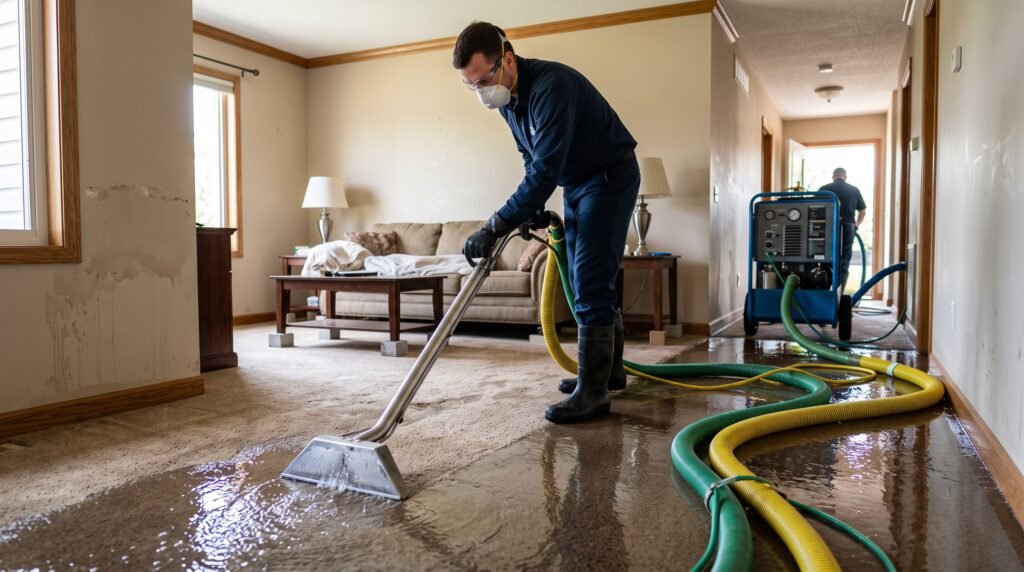
Standing water should be removed quickly, but homeowners should avoid using ordinary household vacuums. These devices are not designed for water extraction and may create an electrical hazard.
Professional restoration equipment can remove large amounts of water and help reach moisture trapped in carpets, padding, flooring, and other materials.
In minor situations involving clean water, towels and mops may help control a small area. However, visible water is often only part of the problem.
Begin Structural Drying
Removing standing water does not mean the property is completely dry. Moisture can remain inside drywall, wood framing, subfloors, insulation, and cabinets.
Professional water damage restoration typically includes air movers, dehumidifiers, moisture meters, and drying equipment. Moisture levels should be monitored until affected materials reach safe conditions.
Opening windows or using household fans may not provide enough drying power, especially in humid environments.
Move Belongings Carefully
When it is safe, move unaffected furniture and personal belongings away from wet areas. Place aluminum foil, plastic blocks, or protective materials beneath furniture legs to reduce staining and moisture absorption.
Wet documents, photographs, textiles, and electronics may require specialized restoration. Avoid turning on devices that have been exposed to water.
Watch for Signs of Mold
Mold can begin developing when moisture remains inside a property. Warning signs may include musty odors, discoloration, swollen materials, peeling paint, or increasing humidity.
Because mold often grows behind walls or under flooring, it may not be immediately visible. Prompt water removal and thorough drying are essential.
Request Professional Restoration
Water damage restoration may involve emergency water extraction, moisture inspection, structural drying, cleaning, sanitizing, odor removal, material removal, and repairs.
A professional assessment can help determine which materials can be dried and saved and which ones require replacement.
Water damage can feel overwhelming, but taking the situation one step at a time can make recovery more manageable. Focus first on safety, stop the source, document the damage, and begin professional drying as quickly as possible.
Fast action can help protect your home and reduce the risk of long-term problems.
Hidden Water Damage: Signs Homeowners Should Not Ignore
Water damage is not always easy to see. A major flood or burst pipe creates obvious signs, but smaller leaks can remain hidden for weeks or even months.
Water may travel behind walls, beneath flooring, above ceilings, or inside cabinets without creating immediate puddles. By the time homeowners notice the problem, moisture may have already affected building materials and encouraged mold growth.
Recognizing the early warning signs of hidden water damage can help prevent more serious problems.
Musty or Unusual Odors
A persistent musty smell is one of the most common signs of hidden moisture. Damp drywall, wood, insulation, carpet padding, and other porous materials can hold water and create stale odors.
Air fresheners may cover the smell temporarily, but they do not solve the source of the problem.
If a room smells damp even though no visible water is present, a moisture inspection may be necessary.
Discoloration on Walls or Ceilings
Yellow, brown, or dark stains on walls and ceilings may indicate a plumbing leak, roof leak, or moisture problem above the surface.
The stain may grow slowly, change shape, or become darker over time. Bubbling paint and peeling wallpaper may also appear.
Even a small stain should not be ignored. The visible mark may represent a larger wet area behind the drywall.
Warped or Buckled Flooring
Water beneath hardwood, laminate, vinyl, or tile can cause floors to lift, separate, buckle, or feel uneven.
Wooden flooring may develop raised edges or gaps between boards. Laminate may swell and become soft. Tile may loosen if moisture damages the materials beneath it.
Flooring can appear dry on top while the subfloor remains wet.
Soft Drywall
Drywall that feels soft, swollen, or crumbly may have absorbed water. Baseboards may separate from the wall, and the lower portion of the drywall may become discolored.
Avoid pressing hard on damaged drywall because wet sections can collapse or break.
Professional moisture meters can determine how far the water has spread.
Peeling Paint or Wallpaper
Moisture behind painted walls can cause the surface to bubble, crack, peel, or blister. Wallpaper may begin separating at the seams.
These changes often occur because water prevents the paint or adhesive from remaining attached to the wall.
Repainting without addressing the moisture source will not provide a lasting solution.
Unexplained Changes in Your Water Bill
A higher-than-normal water bill may indicate a hidden plumbing leak. Toilets, supply lines, pipes inside walls, and underground plumbing can waste significant amounts of water.
If household water use has not changed but the bill has increased, inspect fixtures and consider requesting a professional plumbing evaluation.
Sounds of Running or Dripping Water
Dripping, hissing, or running-water sounds may point to a hidden leak. These sounds may be more noticeable at night when the home is quiet.
Turn off faucets and water-using appliances. If you still hear water moving, the plumbing system may need inspection.
Mold or Mildew Growth
Mold may appear as black, green, white, or brown spots on walls, ceilings, cabinets, and flooring. However, visible mold is not always present.
Mold can grow behind drywall, beneath carpet, inside insulation, and around hidden plumbing.
A musty odor or recurring respiratory irritation may suggest a moisture issue, although these signs can have other causes.
Damaged Cabinets and Furniture
Water near kitchens, bathrooms, and laundry rooms can affect cabinets and built-in furniture. Wood may swell, separate, or become difficult to open.
Cabinet bases are especially vulnerable because water can collect underneath them without being noticed.
Why Hidden Water Damage Is Serious
Hidden moisture can weaken building materials, damage electrical systems, create odors, attract pests, and contribute to mold growth.
The longer the water remains, the more difficult it may become to restore the affected area. Materials that could have been dried early may eventually require removal and replacement.
How Professionals Find Hidden Moisture
Water damage restoration professionals may use moisture meters, thermal imaging cameras, humidity readings, and physical inspections to locate wet areas.
These tools help identify moisture inside walls, floors, ceilings, and other spaces without relying only on visible signs.
Ignoring a small stain, odor, or warped floor can allow the problem to grow. Homeowners who notice signs of hidden water damage should investigate the source promptly.
Early detection and professional drying can help protect the structure of the home and prevent unnecessary repairs.