Water damage can happen when homeowners least expect it. A pipe may burst during the night, a washing machine hose may fail, a toilet may overflow, or rainwater may enter through a damaged roof. No matter how the water entered the property, responding quickly is one of the most important steps a homeowner can take.
At first, the damage may appear limited to a small puddle or a wet section of carpet. However, water rarely stays in one place. It can travel beneath flooring, soak into drywall, enter cabinets, and reach insulation or structural framing.
Understanding why immediate water damage restoration matters can help homeowners protect their property and avoid more serious complications.
Water Spreads Quickly
Building materials such as drywall, wood, carpet, and insulation are porous. This means they can absorb water rapidly.
A leak that begins in one room may affect nearby walls, adjacent rooms, or the floor below. Water may also follow plumbing lines, electrical openings, and gaps in the structure.
Even after the visible water is removed, moisture may remain in hidden spaces. Without professional inspection, homeowners may believe the area is dry when wet materials are still present behind walls or beneath flooring.
Flooring Can Become Permanently Damaged
Different types of flooring respond to water in different ways. Hardwood may swell, cup, or buckle. Laminate flooring can absorb moisture and separate. Carpet padding may hold water even when the carpet surface feels dry.
Tile may appear unaffected, but moisture can become trapped beneath it and weaken the adhesive or subfloor.
Fast extraction and drying increase the possibility of saving certain flooring materials. When water remains for too long, replacement may become necessary.
Drywall and Insulation Absorb Moisture
Drywall can absorb water from the floor upward. This process may create stains, swelling, softness, peeling paint, or damaged baseboards.
Wet insulation can lose its effectiveness and hold moisture inside walls. Depending on the water source and the length of exposure, some insulation and drywall may need to be removed.
Professional restoration teams evaluate moisture levels before deciding which materials can be dried and which must be replaced.
Mold May Begin Developing
Mold spores are naturally present in the environment. When they are exposed to moisture and suitable materials, they may begin growing.
Drywall, wood, carpet, paper, and dust can provide the organic material mold needs. Hidden areas with limited airflow are especially vulnerable.
Prompt water removal, dehumidification, and structural drying can reduce the conditions that encourage mold growth. Waiting several days before addressing the damage may allow moisture to spread and create a more complicated restoration process.
Furniture and Personal Belongings May Be Affected
Water can damage furniture, clothing, documents, photographs, electronics, rugs, and personal possessions.
Wooden furniture may swell or develop stains. Upholstered items can absorb moisture and odors. Documents and photographs may stick together or become distorted.
Moving unaffected belongings away from wet areas can help protect them. Damaged items should be evaluated before being discarded because some may be restored using specialized cleaning and drying methods.
Electrical Systems May Become Unsafe
Water near outlets, wiring, appliances, or electrical panels creates a serious safety concern. Homeowners should never enter standing water when electricity may be present.
Electrical systems exposed to moisture should be inspected before power is restored. Appliances and electronics that have been wet should not be turned on until they have been professionally evaluated.
Safety must always come before cleanup.
Contaminated Water Requires Special Handling
Water from a clean supply line is different from water that comes from a toilet backup, sewer line, storm flooding, or appliance discharge.
Contaminated water may contain bacteria, chemicals, and other harmful substances. Porous materials exposed to this type of water may require removal rather than ordinary cleaning.
Homeowners should avoid direct contact with questionable water sources and keep children and pets away from affected areas.
Professional Equipment Improves Drying
Household fans and towels may help with a very small spill, but they are often not enough for significant water damage.
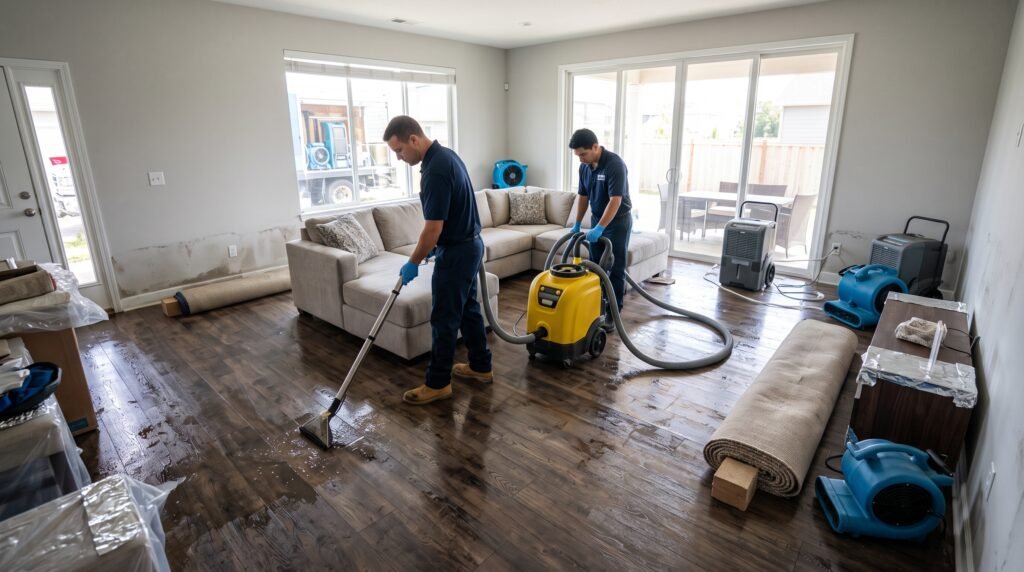
Restoration professionals use extraction machines, air movers, dehumidifiers, moisture meters, and thermal imaging equipment. These tools help remove water, control humidity, and monitor hidden moisture.
Drying equipment is positioned according to the layout of the affected area and the materials involved. Moisture readings are taken throughout the process to confirm that the property is drying properly.
Delays Can Increase the Amount of Work Required
A small water problem may become more extensive when restoration is delayed. Materials that might have been dried could become too damaged to save. Odors may develop, paint may peel, flooring may buckle, and mold risk may increase.
Responding quickly does not mean rushing into an unsafe area. It means taking appropriate action as soon as conditions allow.
Turn off the water source when safe, document the damage, contact the insurance provider, and request professional water damage restoration.
A water emergency can feel overwhelming, but homeowners do not have to solve every problem at once. Start with safety and focus on preventing the water from spreading.
Fast action can help reduce additional damage, preserve more of the home, and create a clearer path toward restoring the property.