Mold can develop anywhere excess moisture remains trapped inside a property. It may appear after a plumbing leak, roof problem, appliance failure, flood, drainage issue, or period of high indoor humidity. In some cases, mold is easy to see. In others, it grows behind walls, beneath flooring, inside cabinets, or above ceilings.
Ignoring mold can allow the affected area to expand and cause additional damage to building materials. Professional mold removal and remediation focuses on identifying the moisture source, controlling contaminated areas, removing damaged materials, and restoring the property through a careful and organized process.
SOS Restoration of Santa Clara County provides mold removal and remediation services for residential and commercial properties. Our goal is to address the visible problem while also identifying the moisture and hidden damage that may be contributing to mold growth.
Why Mold Develops Inside Properties
Mold spores are naturally present in many indoor and outdoor environments. However, mold requires moisture to grow. When a building material remains damp, mold may begin developing on or inside the surface.
Common materials that can support mold growth include:
- Drywall
- Wood framing
- Carpet
- Carpet padding
- Insulation
- Ceiling tiles
- Cabinet materials
- Wallpaper
- Fabric
- Paper products
The combination of moisture, limited airflow, and organic material can create favorable conditions for mold.
The Difference Between Mold Removal and Mold Remediation
The terms mold removal and mold remediation are often used together, but remediation involves more than simply cleaning visible growth.
Mold removal refers to eliminating affected materials or cleaning mold from surfaces. Mold remediation is the broader process of bringing contamination under control and correcting the conditions that allowed it to develop.
A complete remediation plan may include:
- Inspection of the affected property
- Moisture detection
- Identification of the water source
- Containment of the work area
- Air filtration
- Removal of damaged materials
- Detailed cleaning
- Structural drying
- Odor treatment
- Repair and reconstruction
The objective is to manage the problem throughout the affected area rather than focusing only on what is visible.
Common Places Where Mold Is Found
Mold often develops in areas where water is used regularly or ventilation is limited.
Bathrooms
Bathrooms are exposed to steam, condensation, plumbing leaks, and frequent moisture. Mold may develop around showers, tubs, toilets, vanities, ceilings, and walls.
Damaged grout, missing caulk, or leaking supply lines can allow water to move behind finished surfaces.
Kitchens
Leaks beneath sinks, refrigerators, dishwashers, and water supply lines may create hidden moisture inside cabinets or under flooring.
Because cabinets restrict airflow, small leaks can remain unnoticed for an extended period.
Laundry Rooms
Washing machine hoses, drains, and plumbing connections can leak or overflow. Dryers may also contribute to elevated humidity if ventilation is not working correctly.
Attics
Roof leaks, poor ventilation, and condensation can create mold problems in attics. Growth may appear on wood framing, insulation, roof decking, or stored materials.
Basements and Crawl Spaces
These spaces may experience high humidity, foundation moisture, drainage problems, or poor airflow. Mold may remain hidden because the areas are not inspected regularly.
Walls and Ceilings
A hidden pipe leak or roof problem can allow moisture to collect inside wall or ceiling cavities. Mold may begin growing before stains appear on the visible surface.
Signs of a Possible Mold Problem
Mold is not always immediately visible. Property owners should watch for changes that may indicate hidden moisture or contamination.
Possible warning signs include:
- Persistent musty odors
- Dark or unusual spots on surfaces
- Peeling paint
- Bubbling wallpaper
- Soft or damaged drywall
- Water stains
- Warped flooring
- Swollen cabinets
- Recurring condensation
- Damp areas that do not dry
- Previous flooding or water damage
A musty odor is especially important because it may indicate mold behind a wall, beneath flooring, or inside another concealed area.
Why the Moisture Source Must Be Corrected
Mold remediation is unlikely to provide lasting results if the moisture problem remains active.
Before or during remediation, the source should be identified and addressed. This may require plumbing repairs, roof repairs, drainage improvements, ventilation changes, or appliance maintenance.
Common moisture sources include:
- Leaking pipes
- Damaged roofing
- Condensation
- Broken appliance hoses
- Overflowing fixtures
- Poor bathroom ventilation
- Clogged HVAC drain lines
- Foundation seepage
- Window leaks
- Previous water damage that was not dried completely
Correcting the source helps reduce the chance of mold returning after remediation.
Why Containment Is Necessary
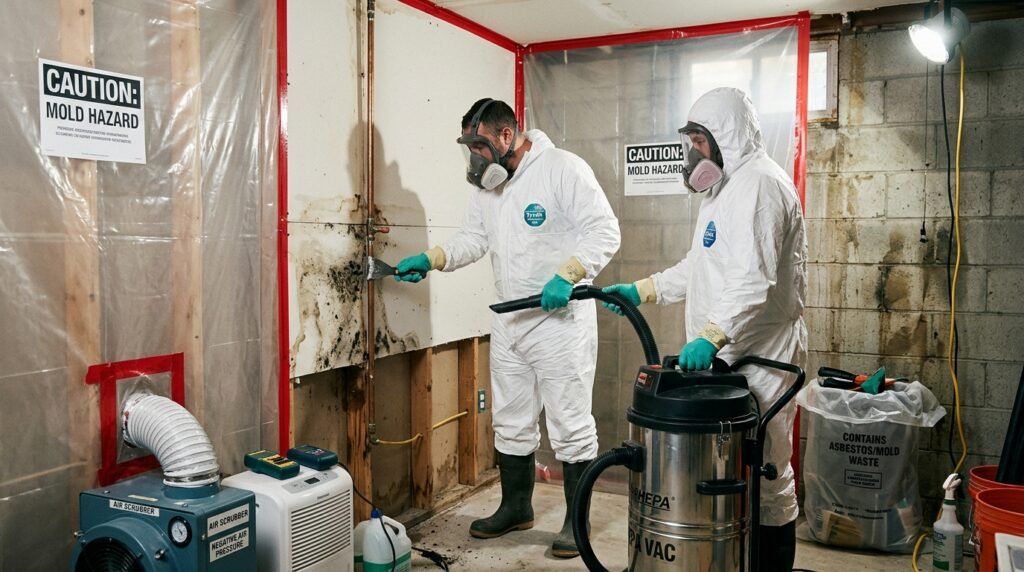
When mold-affected materials are disturbed, dust and particles may move into nearby areas. Containment helps keep the work zone separated from unaffected sections of the property.
Containment may involve:
- Plastic barriers
- Sealed doorways
- Covered vents
- Controlled entry points
- Negative air pressure
- Restricted access
The size and type of containment depend on the extent of the contamination and the layout of the property.
Proper containment is especially important when removing drywall, insulation, flooring, or other porous materials.
Air Filtration During Mold Remediation
Professional air filtration equipment may be used to help capture airborne particles during the remediation process.
HEPA filtration systems are commonly used because they are designed to collect very small particles. The equipment may operate during demolition, cleaning, and material removal.
Air filtration does not replace physical cleaning or removal, but it supports the overall containment process.
Materials That May Need to Be Removed
Some materials can be cleaned and retained. Others may need to be removed because mold has penetrated deeply or the material has been damaged by moisture.
Porous materials are often more difficult to restore because they can absorb water and contamination.
Materials that may require removal include:
- Drywall
- Insulation
- Carpet padding
- Ceiling tiles
- Particleboard
- Damaged wood products
- Wallpaper
- Severely affected fabric
- Water-damaged baseboards
The decision depends on the condition of the material, the moisture source, and the extent of mold growth.
Cleaning Salvageable Surfaces
Materials that remain structurally sound may be cleaned using professional methods.
The cleaning process may include:
- HEPA vacuuming
- Surface wiping
- Detailed scrubbing
- Controlled sanding or abrasion
- Removal of dust and residue
- Cleaning of exposed framing
- Odor-control treatment
The method used should match the type of material and the severity of contamination.
Improper cleaning can spread particles or damage surfaces, which is why a controlled process is important.
Drying the Affected Area
After contaminated materials are removed and surfaces are cleaned, the area must be dried thoroughly.
Commercial dehumidifiers and air-moving equipment may be used to reduce moisture levels in the air and building materials.
Technicians may monitor:
- Wood framing
- Subflooring
- Drywall
- Concrete
- Cabinets
- Ceiling materials
- Indoor humidity
Drying should continue until moisture readings show that the area is ready for repairs.
Restoring the Property After Remediation
Once the affected area has been cleaned and dried, restoration can begin.
Depending on the amount of damage, repairs may include:
- Installing new drywall
- Replacing insulation
- Repairing flooring
- Reinstalling baseboards
- Painting walls and ceilings
- Replacing damaged cabinets
- Matching texture and finishes
- Restoring affected rooms
The goal is to return the space to a clean, dry, and functional condition.
Mold Remediation in Commercial Properties
Commercial buildings can also experience mold from roof leaks, plumbing failures, HVAC condensation, and humidity problems.
Mold may affect:
- Offices
- Retail spaces
- Apartment buildings
- Warehouses
- Restaurants
- Medical facilities
- Schools
- Storage areas
Commercial remediation often requires careful scheduling, containment, and coordination to reduce disruption to employees, tenants, and customers.
How to Reduce the Risk of Future Mold Growth
Property owners can help reduce mold risk by managing moisture and responding quickly to leaks.
Useful preventive steps include:
- Repairing leaks as soon as they are discovered
- Using exhaust fans in bathrooms and kitchens
- Maintaining HVAC systems
- Keeping gutters and drainage systems clear
- Monitoring indoor humidity
- Inspecting appliance connections
- Drying wet materials quickly
- Checking attics and crawl spaces
- Investigating musty odors
- Inspecting areas with previous water damage
Routine maintenance can help identify moisture problems before they become larger remediation projects.
Professional Mold Removal and Remediation in Santa Clara County
Mold can affect both visible surfaces and hidden structural areas. A complete remediation process should include inspection, moisture control, containment, filtration, material removal, cleaning, drying, and repairs.
SOS Restoration of Santa Clara County provides professional mold removal and remediation services for homes and businesses. Our team helps identify the source, control the affected area, remove damaged materials, clean salvageable surfaces, and prepare the property for restoration.
When mold appears or a persistent musty odor suggests hidden growth, delaying action can allow the problem to spread. Contact SOS Restoration of Santa Clara County for professional mold removal and remediation services and a thorough response from inspection through restoration.