Mold can develop in homes and commercial properties when moisture remains inside walls, ceilings, flooring, insulation, or other building materials. A roof leak, plumbing problem, appliance failure, flooding event, or elevated indoor humidity can create the damp conditions mold needs to grow.
Although mold may begin in a small area, it can spread into hidden spaces and affect materials throughout the property. Simply wiping or painting over visible growth does not address the moisture source or contamination that may be present behind the surface.
Professional mold removal and remediation focuses on identifying affected areas, controlling the spread of mold, removing damaged materials, cleaning salvageable surfaces, and correcting the moisture conditions that allowed the problem to develop.
SOS Restoration of Santa Clara County provides mold removal and remediation services for residential and commercial properties. A detailed restoration process helps protect the building and restore affected areas to a cleaner and safer condition.
What Is Mold Remediation?
Mold remediation is a structured process used to manage and remove mold contamination from a property. The goal is not only to clean visible mold but also to address contaminated materials, airborne particles, hidden moisture, and the conditions contributing to the growth.
A professional remediation project may include:
- Property inspection
- Moisture detection
- Identification of affected materials
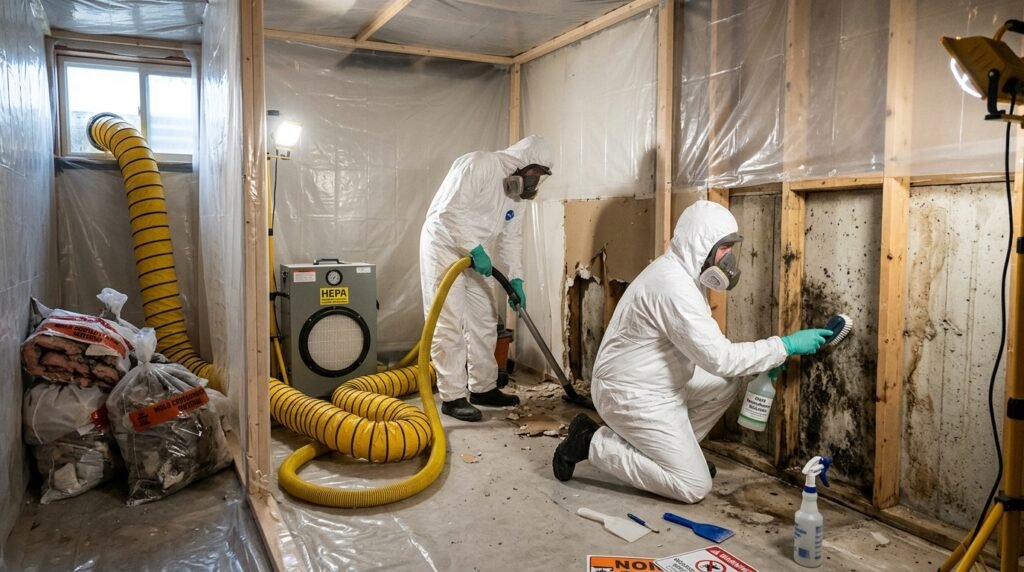
- Containment of the work area
- Air filtration
- Removal of damaged porous materials
- Cleaning of structural surfaces
- Drying and dehumidification
- Odor treatment
- Repairs to affected areas
Each mold situation is different. The amount of work required depends on the size of the affected area, the materials involved, the moisture source, and how long the problem has been present.
Common Causes of Mold Growth
Mold problems are usually connected to excess moisture. Finding and correcting the source is an essential part of the remediation process.
Plumbing Leaks
Leaking pipes, loose fittings, damaged supply lines, and dripping fixtures can release moisture behind walls or beneath cabinets. Slow plumbing leaks may remain unnoticed for long periods, allowing mold to develop inside concealed areas.
Roof Leaks
Damaged roofing, flashing, vents, or drainage systems can allow rainwater to enter attics, ceilings, and walls. Wet insulation and wood framing can create favorable conditions for mold growth.
Appliance Failures
Washing machines, dishwashers, refrigerators, and water heaters may leak when hoses, seals, or connections fail. Moisture can spread beneath flooring and behind nearby cabinets before the problem is discovered.
Flooding and Water Damage
Flooding, broken pipes, overflows, and stormwater intrusion can saturate porous materials. If these materials are not dried properly, mold may begin developing in damp areas.
Poor Ventilation
Bathrooms, kitchens, laundry rooms, and other humid spaces require adequate ventilation. Without proper airflow, condensation may collect on walls, ceilings, windows, and other surfaces.
HVAC and Condensation Problems
Air-conditioning systems, ducts, and condensate lines may contribute to moisture problems when they are damaged or poorly maintained. Condensation can also develop around vents and cold surfaces.
Signs That Mold May Be Present
Visible growth is one of the clearest indicators of a mold problem, but mold can also develop behind finished surfaces.
Common warning signs include:
- Dark, green, white, or discolored patches
- Persistent musty odors
- Water stains on walls or ceilings
- Peeling or bubbling paint
- Warped flooring or baseboards
- Damp drywall
- Condensation around windows or vents
- Recurring moisture in the same area
- Previous water damage
- Swollen cabinets or wood materials
A musty odor without visible growth may indicate mold inside a wall cavity, beneath flooring, or above a ceiling.
Why Mold Should Not Be Ignored
Mold can gradually damage building materials if the moisture problem continues. Drywall may weaken, insulation may become contaminated, wood surfaces may deteriorate, and finishes may stain or peel.
The affected area may also expand beyond the original moisture source. Mold spores and small particles can be disturbed by airflow, cleaning attempts, demolition, or everyday activity.
Addressing the problem early can help limit the affected area and reduce the amount of material that may need to be removed.
Why Surface Cleaning May Not Solve the Problem
Cleaning visible mold with household products may temporarily improve the appearance of a surface, but it does not always eliminate contamination inside porous materials.
Mold may remain within:
- Drywall
- Carpet padding
- Insulation
- Wood products
- Ceiling tiles
- Cabinet materials
- Subflooring
- Wall cavities
Painting over a mold-affected wall can hide stains without correcting the underlying moisture. If the source remains active, the growth may return or spread into surrounding materials.
Professional remediation addresses the affected materials and the conditions that caused the problem.
The Mold Removal and Remediation Process
A complete remediation project generally follows a series of controlled steps.
1. Inspection and Moisture Assessment
The property is inspected to locate visible damage, identify possible hidden contamination, and determine the moisture source.
Moisture meters and other inspection tools may be used to evaluate walls, floors, ceilings, and structural materials. The findings help determine the boundaries of the affected area.
2. Correcting the Moisture Source
Mold removal will not provide a long-term solution if moisture continues entering the area. Plumbing leaks, roof problems, condensation, drainage issues, or appliance failures should be corrected as part of the overall restoration plan.
3. Establishing Containment
Containment helps separate the affected space from other parts of the property. Plastic barriers, sealed openings, and controlled access may be used to reduce the movement of dust and particles during removal.
The heating and cooling system may also need to be protected to prevent the work area from affecting other rooms.
4. Air Filtration
Professional air filtration equipment may be used during remediation. These systems help capture airborne particles created during cleaning and material removal.
Maintaining controlled airflow within the work area supports a cleaner remediation process.
5. Removing Damaged Materials
Some porous materials cannot be cleaned effectively after extensive mold contamination. These materials may need to be removed and disposed of carefully.
Materials that may require removal include:
- Saturated drywall
- Contaminated insulation
- Carpet and padding
- Damaged ceiling tiles
- Swollen composite wood
- Severely affected baseboards
- Porous contents that cannot be restored
Material removal also provides access to concealed framing and hidden surfaces that require cleaning.
6. Cleaning Structural Surfaces
Exposed framing, flooring, and other salvageable materials are cleaned using methods appropriate for the surface and level of contamination.
Cleaning may involve detailed surface removal, HEPA vacuuming, wiping, and other professional techniques. The objective is to remove visible residue and remaining particles from materials that can be retained.
7. Drying and Dehumidification
After cleaning, the affected area must be dried completely. Air movers and dehumidifiers may be used to reduce moisture in building materials and indoor air.
Moisture levels are monitored before repairs begin. Rebuilding over damp materials can allow the original problem to return.
8. Repairs and Restoration
Once the remediation and drying stages are complete, removed materials can be replaced.
Restoration may include:
- Drywall installation
- Insulation replacement
- Baseboard installation
- Flooring repairs
- Cabinet repairs
- Ceiling restoration
- Painting and finishing
- Texture matching
The extent of reconstruction depends on how much material was affected.
Mold in Hidden Areas
Mold frequently develops in places that are difficult to inspect. These areas may include:
- Behind kitchen or bathroom cabinets
- Under sinks
- Beneath carpet and flooring
- Inside wall cavities
- Around plumbing lines
- Above ceiling materials
- Inside attics or crawl spaces
- Around HVAC equipment
Opening walls or removing flooring without proper containment may disturb contaminated materials. A professional assessment helps determine the safest way to access hidden areas.
Preventing Mold After Remediation
Correcting moisture conditions is one of the most important steps in preventing mold from returning.
Property owners can reduce future risk by:
- Repairing plumbing leaks promptly
- Maintaining the roof and gutters
- Improving bathroom and kitchen ventilation
- Keeping indoor humidity under control
- Drying water-damaged areas quickly
- Inspecting appliance hoses and connections
- Maintaining HVAC and condensate systems
- Addressing recurring condensation
- Checking under sinks and around water heaters
- Investigating musty odors immediately
Properties with a history of leaks or flooding should be inspected regularly for signs of moisture.
Mold Remediation for Homes and Businesses
Mold can affect residential rooms, offices, retail spaces, warehouses, rental properties, and other commercial environments. Business properties may require additional planning to protect equipment, inventory, employees, tenants, and customers.
Containment and work areas can be organized according to the layout and use of the building. The objective is to manage the affected space while reducing disruption to unaffected areas.
Professional Mold Removal in Santa Clara County
Mold remediation requires more than cleaning stains from a wall. A complete response includes moisture detection, containment, material removal, air filtration, structural cleaning, drying, and restoration.
SOS Restoration of Santa Clara County provides professional mold removal and remediation for homes and businesses. Our team evaluates the affected areas, identifies moisture conditions, removes damaged materials, cleans salvageable surfaces, and prepares the property for restoration.
When you notice visible mold, musty odors, water stains, or recurring moisture, addressing the problem promptly can help prevent it from spreading. Contact SOS Restoration of Santa Clara County for professional mold removal and remediation services.