Water damage can turn a normal day into a stressful emergency. A burst pipe, leaking appliance, roof problem, plumbing backup, or severe storm can introduce large amounts of water into a property in a short period of time. Even a small leak can cause serious damage when moisture spreads into walls, flooring, cabinets, insulation, and structural materials.
Knowing what to do immediately after water damage can help protect the property and reduce the chance of additional problems. Professional water damage restoration is essential because visible water is often only one part of the issue. Moisture may remain hidden beneath surfaces long after standing water has been removed.
SOS Restoration of Santa Clara County provides professional water damage restoration services for residential and commercial properties. A careful, step-by-step response can help stabilize the affected area, dry the structure, and prepare the property for repairs.
Put Safety First
Before entering an area affected by water, it is important to consider potential safety hazards. Water can come into contact with electrical systems, damaged building materials, sharp objects, or contaminants.
Avoid entering rooms where:
- Water is near outlets, appliances, or electrical panels
- The ceiling appears swollen or unstable
- Sewage or contaminated water may be present
- Flooring feels weak or uneven
- There is a strong odor from chemicals or wastewater
When it is safe to do so, turn off the source of water. This may involve closing the main water valve, shutting off an appliance supply line, or stopping a plumbing fixture from overflowing.
If the water source cannot be controlled safely, leave the area and contact the appropriate professional.
Identify the Source of the Water
Finding the source is an important part of controlling the damage. Water may enter a property from an obvious plumbing failure, but some problems are more difficult to identify.
Common sources include:
- Burst or leaking pipes
- Water heater failures
- Overflowing toilets, sinks, or bathtubs
- Washing machine hose failures
- Dishwasher leaks
- Refrigerator supply line leaks
- Roof damage
- Window or door leaks
- Stormwater intrusion
- Drain or sewer backups
- Heating and cooling system leaks
Stopping the source prevents new water from entering while the restoration process begins.
Remove Valuable Items When Safe
Furniture, electronics, documents, rugs, and personal belongings may be damaged if they remain in contact with water. Move unaffected items away from the wet area when it is safe to do so.
Do not attempt to lift heavy furniture alone or handle electrical equipment that has been exposed to water. Some items may require specialized cleaning or content restoration.
Placing aluminum foil or protective blocks beneath furniture legs may help prevent additional staining on wet flooring, but this is only a temporary measure.
Why Standing Water Must Be Removed Quickly
Standing water can continue spreading through porous materials. Drywall, wood, carpet padding, insulation, and subflooring can absorb moisture and carry it into areas that initially appeared unaffected.
As water travels, it can cause:
- Swollen wood
- Warped flooring
- Loose tiles
- Damaged drywall
- Peeling paint
- Weakened ceilings
- Stained surfaces
- Damaged cabinets
- Unpleasant odors
- Increased indoor humidity
Removing standing water is one of the first major steps in the restoration process. Professional extraction equipment can remove water more effectively than household tools and reduce the amount of time required for structural drying.
Hidden Moisture Can Cause Ongoing Problems
A common mistake after water damage is assuming the problem is resolved once the floor looks dry. Moisture can remain trapped beneath flooring, inside wall cavities, behind cabinets, and around framing.
Hidden moisture may not be immediately visible, but warning signs can develop over time. These signs may include discoloration, bubbling paint, soft drywall, musty odors, or flooring that begins to lift.
Professional restoration technicians use moisture meters and other inspection equipment to locate affected materials. Identifying hidden water is necessary for creating an effective drying plan.
How Professional Structural Drying Works
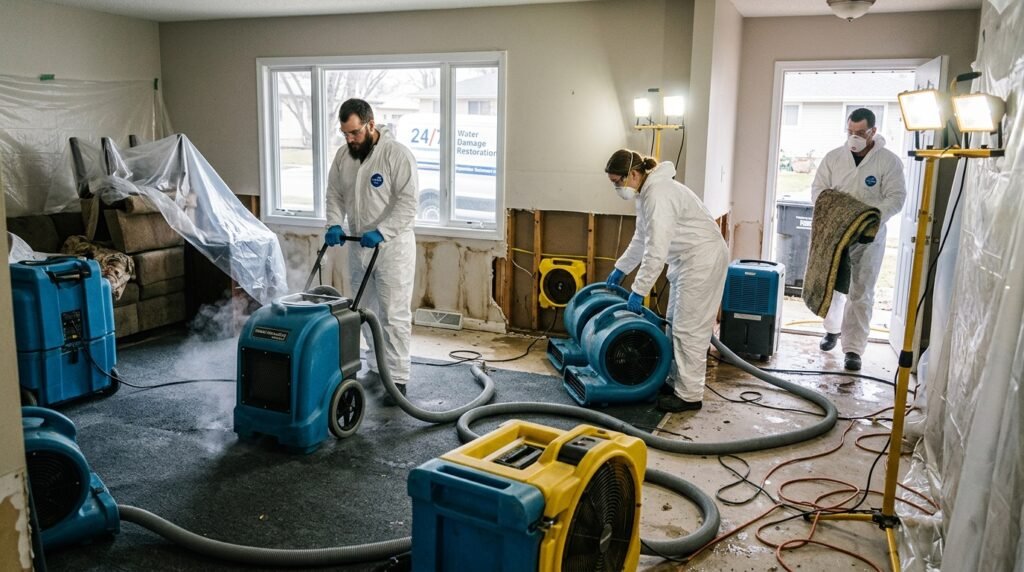
Structural drying involves removing moisture from both the building materials and the surrounding air. Restoration professionals may use air movers, commercial dehumidifiers, extraction tools, and monitoring equipment.
Air movers increase airflow across wet surfaces. Dehumidifiers remove moisture from the air, helping prevent that moisture from being absorbed back into walls, flooring, and other materials.
Equipment placement is based on the layout of the affected area, the type of materials involved, and the amount of moisture present.
During the drying process, technicians may return to monitor moisture levels and adjust the equipment. Drying should be based on measurements rather than appearance alone.
Cleaning and Sanitizing Water-Damaged Areas
The amount of cleaning required depends on the source of the water. Clean water from a supply line is handled differently from water associated with a drain backup, toilet overflow, or outdoor flooding.
Contaminated water may contain bacteria, debris, chemicals, or other harmful substances. Porous materials exposed to contaminated water may need to be removed instead of dried and reused.
Professional cleaning may involve:
- Surface cleaning
- Sanitizing treatments
- Odor-control procedures
- Removal of damaged materials
- Cleaning of salvageable contents
- Disposal of contaminated debris
Proper cleaning helps prepare the property for repairs and continued use.
Materials That May Need to Be Removed
Not every wet material can be saved. The decision to remove a material depends on the water source, the amount of exposure, the condition of the material, and whether it can be dried effectively.
Materials that may require removal include:
- Saturated drywall
- Wet insulation
- Damaged carpet padding
- Swollen particleboard
- Warped laminate flooring
- Contaminated porous materials
- Severely damaged baseboards
- Damaged ceiling sections
Removing unsalvageable materials also gives technicians access to hidden moisture behind walls and beneath floors.
The Importance of Timely Restoration
Water damage does not remain limited to the location where it started. Moisture can migrate into nearby rooms and lower levels. Delaying restoration may lead to a larger affected area and more extensive repairs.
Fast action can help:
- Limit moisture migration
- Protect salvageable materials
- Reduce structural deterioration
- Improve the drying process
- Control odors
- Identify hidden damage
- Prepare the property for repairs sooner
Water damage should be addressed even when the affected area appears small.
Preventing Future Water Damage
After the property has been restored, it is useful to review what caused the damage. Preventive maintenance can reduce the risk of another incident.
Property owners should regularly inspect:
- Plumbing supply lines
- Water heaters
- Appliance hoses
- Roof materials
- Gutters and downspouts
- Window seals
- Bathroom fixtures
- Kitchen plumbing
- Drain lines
- Heating and cooling systems
It is also important to know the location of the main water shutoff valve. Turning off the water quickly can significantly reduce the amount of damage caused by a plumbing failure.
Professional Water Damage Restoration in Santa Clara County
Water damage requires more than surface-level cleanup. Complete restoration involves inspecting the affected areas, extracting water, finding hidden moisture, drying structural materials, cleaning impacted surfaces, and completing necessary repairs.
SOS Restoration of Santa Clara County helps homeowners and businesses respond to unexpected water damage with an organized restoration process. Our team works to identify the full extent of the damage and take the necessary steps to restore the affected property.
When a leak, plumbing failure, storm, or appliance malfunction causes water damage, immediate action is important. Contact SOS Restoration of Santa Clara County for professional water damage restoration and dependable assistance when your property needs it most.