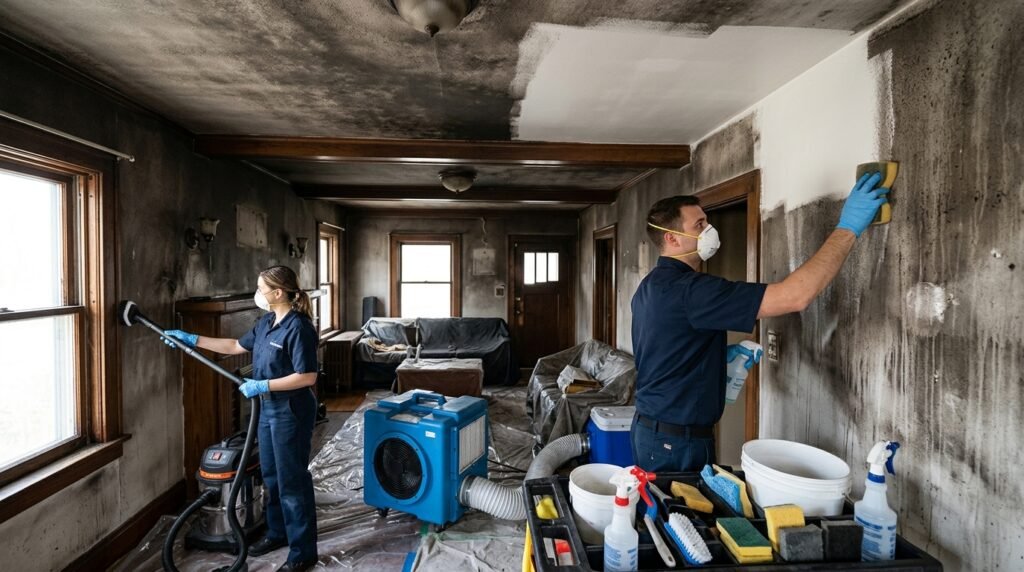
Smoke damage restoration is a detailed process designed to remove soot, odors, residue, and contamination after a fire. It involves more than wiping walls or opening windows.
Smoke can affect nearly every surface in a home, including ceilings, flooring, furniture, electronics, air ducts, insulation, and personal belongings. The type of smoke residue also varies depending on what burned.
Understanding the restoration process can help homeowners know what to expect.
Initial Inspection
The process begins with a detailed inspection of the property. Restoration professionals identify the areas affected by fire, smoke, soot, and water.
They evaluate walls, ceilings, flooring, cabinets, furniture, ventilation systems, and personal belongings.
The inspection also helps determine the type of soot present. Dry soot, wet soot, protein residue, and oily smoke deposits require different cleaning methods.
Securing the Property
If windows, doors, or roofing materials were damaged, the property may need emergency board-up or roof tarping.
Securing the home protects it from rain, animals, theft, and additional damage while restoration is underway.
Water Removal and Drying
Water used during firefighting may remain throughout the property. Before smoke cleanup can be completed, standing water must be removed and wet building materials must be dried.
Restoration professionals may use pumps, extraction equipment, air movers, and dehumidifiers.
Moisture meters help confirm whether flooring, walls, and structural materials are drying properly.
Air Filtration
Smoke particles can remain suspended in the air. Air scrubbers equipped with HEPA filters help capture soot, dust, and fine particles.
Negative air pressure may also be used to prevent contaminated air from moving into clean areas.
Air filtration supports the overall cleanup process but does not replace surface cleaning.
Removal of Loose Soot
Loose soot is often removed before wet cleaning begins. HEPA vacuums and specialized dry-cleaning methods help lift particles without spreading them.
Ordinary vacuums should not be used because they may blow fine soot back into the room.
Cleaning Walls and Ceilings
Walls and ceilings may require dry cleaning, chemical sponges, specialized detergents, or other methods.
The cleaning method depends on the surface and the type of residue.
Some painted surfaces can be restored, while heavily stained or damaged drywall may require sealing, repainting, or replacement.
Cleaning Furniture and Personal Belongings
Furniture, clothing, rugs, documents, dishes, and decorative items may be evaluated individually.
Some items can be cleaned on site. Others may be packed and moved to a controlled cleaning facility.
Professional contents restoration may include ultrasonic cleaning, textile cleaning, deodorization, and document recovery.
Odor Removal
Smoke odor can remain inside porous materials even after visible soot is removed.
Odor treatment may include air scrubbing, thermal fogging, hydroxyl treatment, ozone treatment, surface sealing, and removal of contaminated materials.
The correct method depends on the property and the severity of the odor.
HVAC and Duct Cleaning
The HVAC system may require inspection and cleaning if smoke entered the ducts.
Filters, vents, registers, and internal components may need attention before the system is used again.
Operating a contaminated HVAC system can redistribute soot and odor.
Material Removal
Some materials cannot be restored. Burned drywall, heavily contaminated insulation, damaged carpet padding, and certain porous materials may need removal.
Removing these materials helps eliminate odor sources and allows access to hidden contamination.
Repairs and Reconstruction
After cleaning and deodorization, repairs can begin.
This may include replacing drywall, insulation, flooring, paint, cabinets, trim, doors, and other damaged materials.
The goal is to restore the home’s safety, function, and appearance.
Final Inspection
A final inspection confirms that soot has been removed, odors have been treated, moisture levels are acceptable, and repairs are complete.
Homeowners should walk through the property and ask questions about the work performed.
Smoke damage restoration can be a complex process, but each step has a clear purpose. From air filtration to final repairs, the goal is to remove contamination and create a safe, comfortable living environment again.
Why Smoke Odor Keeps Returning After a Fire
One of the most frustrating problems after a fire is recurring smoke odor. Homeowners may clean visible stains, open windows, spray air fresheners, and repaint walls, only to notice the smell returning days or weeks later.
Smoke odor is difficult to remove because it does not stay on the surface. It can become trapped inside porous materials and hidden areas of the home.
Understanding why the smell returns can help homeowners choose an effective restoration approach.
Smoke Penetrates Porous Materials
Drywall, wood, carpet, upholstery, insulation, clothing, and paper can absorb smoke particles and odor molecules.
Even when the surface looks clean, contamination may remain deep inside the material.
During warm or humid conditions, trapped odor molecules may be released back into the air. This is why the smell can become stronger during hot weather.
Hidden Soot Remains in the Property
Smoke can enter wall cavities, attics, cabinets, closets, HVAC systems, and spaces beneath flooring.
If these areas are not cleaned, they may continue producing odor.
A homeowner may clean the visible room while missing contamination behind baseboards or above the ceiling.
The HVAC System Spreads Odor
Smoke residue inside ducts and mechanical equipment can circulate through the home whenever the heating or cooling system operates.
Replacing only the filter may not be enough. Ductwork, vents, coils, and internal components may require professional cleaning.
The system should be inspected before regular use resumes.
Odor Has Been Covered Instead of Removed
Air fresheners, candles, scented sprays, and perfumes may cover smoke odor temporarily. They do not remove the source.
When the fragrance fades, the original smell returns.
Lasting odor removal requires cleaning or removing the contaminated material.
Improper Cleaning Can Make the Problem Worse
Using water on oily soot can spread residue and push it deeper into surfaces.
Painting over a contaminated wall without proper cleaning and sealing may trap smoke beneath the paint. Odor may eventually pass through the new coating.
Professional cleaning products and sealants are selected based on the type of smoke residue and the material being treated.
Fabrics Hold Smoke Odor
Curtains, rugs, upholstery, mattresses, and clothing may hold odor for long periods.
Standard washing may not remove the contamination. In some cases, heat from a dryer can set the odor into fabric.
Smoke-damaged textiles often require specialized cleaning and deodorization.
Insulation May Need Replacement
Insulation can absorb large amounts of smoke odor. Because it is difficult to clean thoroughly, replacement may be necessary.
This is especially common in attics or wall cavities where heavy smoke accumulated.
Professional Odor Removal Methods
Restoration professionals may use several methods, including:
- HEPA air filtration
- Thermal fogging
- Hydroxyl generators
- Ozone treatment
- Surface cleaning
- Odor counteractants
- Sealing products
- Removal of contaminated materials
The treatment method depends on the severity of the smoke damage and the materials affected.
Why One Treatment May Not Be Enough
Severe smoke damage may require multiple stages of cleaning and deodorization.
For example, loose soot may need to be vacuumed first, followed by surface cleaning, air filtration, odor treatment, and sealing.
Skipping one stage can allow odor to remain.
How Homeowners Can Help
Homeowners should avoid masking the smell with fragrances and should not repaint until the surfaces have been properly treated.
They should also keep the HVAC system off until it has been inspected.
Documenting where the odor is strongest can help restoration professionals locate hidden contamination.
Recurring smoke odor is usually a sign that residue remains somewhere in the property. The solution is not stronger fragrance but a more complete restoration process.
By locating hidden soot, cleaning affected materials, treating the air, and removing materials that cannot be restored, homeowners can achieve a more lasting result.