After a fire, homeowners may notice black soot, stains, and unpleasant odors throughout the property. What they may not see are the fine smoke particles that remain suspended in the air or settle inside hidden areas.
Smoke damage can affect indoor air quality even after the visible smoke has disappeared. These particles may remain on furniture, walls, flooring, air ducts, and personal belongings. Normal household activity can disturb the residue and release it back into the air.
Understanding the relationship between smoke damage and indoor air quality can help homeowners recognize why professional restoration is so important.
What Remains in the Air After a Fire?
Smoke is made up of gases, vapors, and tiny particles produced when materials burn. The exact composition depends on the items involved in the fire.
Wood, paper, plastic, fabric, foam, chemicals, and household products can create different types of airborne residue.
Some particles are large enough to settle quickly, while smaller particles may remain in the air or travel through the ventilation system.
Even when the air looks clear, smoke-related contamination may still be present.
Soot Can Become Airborne Again
Soot that settles on surfaces does not necessarily stay in place.
Walking across contaminated carpet, moving furniture, turning on fans, or touching damaged materials can disturb the particles. Once airborne, they may spread into clean areas or enter the respiratory system.
This is one reason homeowners should limit access to affected rooms until professional cleaning has begun.
The HVAC System May Spread Contamination
Smoke can enter air vents, ductwork, filters, coils, and mechanical components. When the heating or cooling system operates, it may circulate particles and odors throughout the property.
Rooms far from the original fire can become contaminated through the HVAC system.
Replacing the air filter alone may not solve the problem. A detailed inspection can determine whether vents, ducts, or internal components require professional cleaning.
The system should remain off until it has been evaluated.
Common Reactions to Smoke-Damaged Air
Exposure to smoke residue may cause temporary irritation for some people. Possible reactions include coughing, headaches, watery eyes, throat irritation, skin discomfort, or difficulty breathing.
Children, older adults, pets, and people with asthma, allergies, or respiratory conditions may be more sensitive.
The presence or absence of symptoms does not determine whether a property is clean. Smoke contamination should be addressed even when no one is experiencing noticeable discomfort.
Opening Windows Is Not a Complete Solution
Ventilation may help reduce some odors and airborne particles, but it cannot remove contamination trapped inside porous materials.
Smoke may remain inside carpeting, drywall, insulation, furniture, clothing, cabinets, and flooring.
Opening windows may also create air movement that spreads loose soot through the property.
Ventilation should be part of a controlled restoration plan rather than the only cleaning method.
Air Fresheners Only Mask the Problem
Candles, sprays, perfumes, and scented products may temporarily cover smoke odors. However, they do not remove the particles or chemicals responsible for the smell.
In some cases, mixing fragrances with smoke odor can make indoor air more unpleasant.
Successful odor removal requires finding and treating the contaminated materials.
Professional Air Filtration
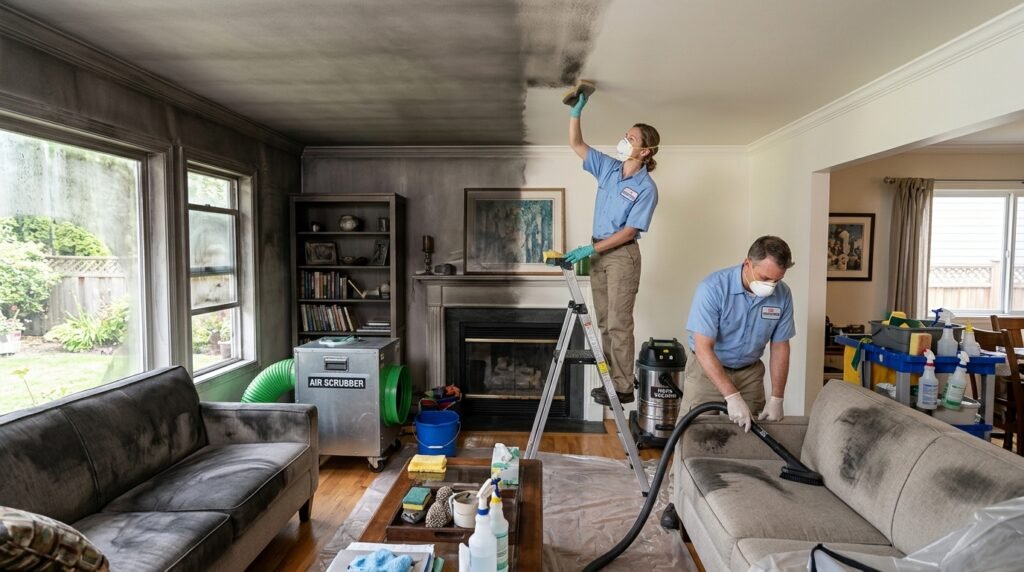
Smoke damage restoration may include the use of air scrubbers with HEPA filters. These machines continuously pull air through filters that capture fine particles.
Negative air pressure may also be created in the damaged area. This helps keep contaminated air from moving into unaffected rooms.
Air filtration works alongside surface cleaning, contents restoration, and odor treatment.
Cleaning Contaminated Surfaces
Improving indoor air quality requires removing soot from walls, ceilings, floors, furniture, and personal belongings.
If residue remains on surfaces, it may continue returning to the air.
Professional cleaning methods vary according to the type of soot and the material affected. Some surfaces may be cleaned, while highly porous or severely contaminated materials may require removal.
Smoke Inside Porous Materials
Drywall, wood, insulation, carpet, and upholstery can absorb smoke particles and odor molecules.
Surface cleaning may not reach contamination that has penetrated deeply. These materials may require advanced deodorization, sealing, or replacement.
Removing hidden sources of smoke odor is essential for improving the overall indoor environment.
Final Air Quality Considerations
Before the property is occupied again, restoration professionals should confirm that affected surfaces have been cleaned, damaged materials have been addressed, and odors have been treated.
Homeowners should also make sure the HVAC system is safe to operate.
A home may look clean while still containing smoke contamination in hidden spaces. That is why smoke damage restoration must address both visible residue and indoor air quality.
Thorough cleaning, professional filtration, ventilation system inspection, and odor removal can help create a safer and more comfortable living environment after a fire.