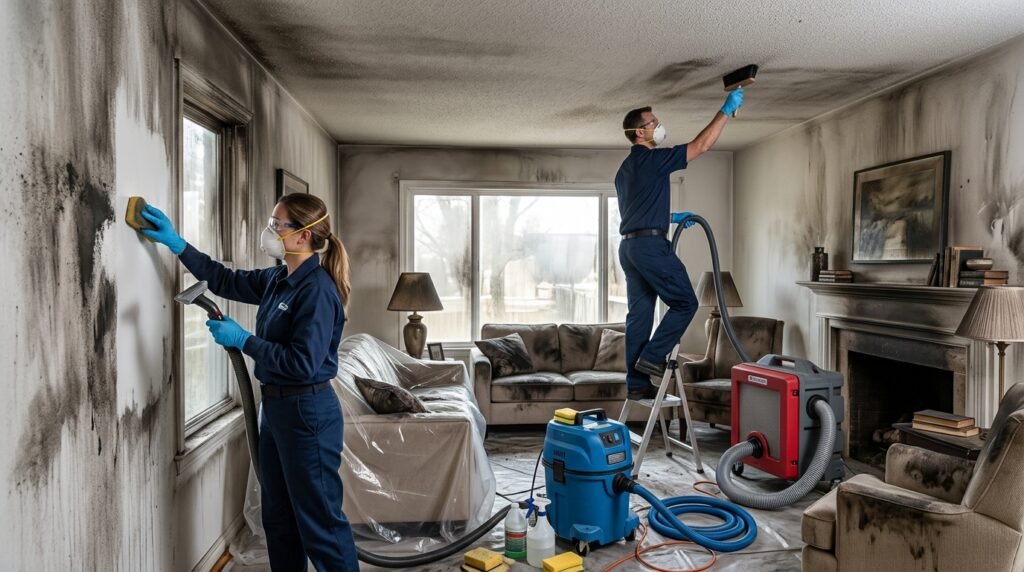
After a residential fire, smoke damage may appear as dark stains on the walls, an unpleasant odor, or a thin layer of residue covering furniture and personal belongings. However, not all smoke damage is the same. The type of residue left behind depends on the materials that burned, the temperature of the fire, and how quickly the flames were extinguished.
Understanding the different types of smoke damage is important because each one requires a specific cleaning approach. Using the wrong products or techniques can spread soot, damage surfaces, and make odors or stains more difficult to remove.
Dry Smoke Damage
Dry smoke is generally created by fast-burning fires that reach high temperatures. Paper, wood, and certain natural materials commonly produce this type of residue.
Dry smoke particles are often fine, powdery, and easier to remove from smooth surfaces than heavier soot. However, their small size allows them to travel through tiny openings and settle inside wall cavities, furniture, electronics, and ventilation systems.
Homeowners should avoid using ordinary vacuums because fine particles may pass through the filter and return to the air. Professional HEPA vacuums are designed to capture smaller particles more effectively.
Dry smoke may seem simple to clean, but its ability to spread throughout the property can make restoration more extensive than expected.
Wet Smoke Damage
Wet smoke is typically produced by slow-burning fires at lower temperatures. Fires involving plastics, rubber, synthetic materials, or smoldering furniture may leave behind thick, sticky residue.
This type of soot can be difficult to remove because it may smear when touched. Wet cleaning without the proper products can spread the residue across walls, cabinets, ceilings, and furniture.
Wet smoke also creates a strong odor that may penetrate deeply into porous materials. Professional cleaners use specialized chemicals and techniques to break down oily residue without damaging the affected surface.
In some cases, heavily contaminated drywall, insulation, carpeting, or upholstery may need to be removed.
Protein Smoke Residue
Protein residue commonly results from cooking fires. When food, grease, or organic materials burn, they may leave behind a nearly invisible film.
Because the residue is difficult to see, homeowners sometimes believe there is no significant smoke damage. However, protein smoke can create a strong and persistent odor.
It may also discolor paint, cabinets, appliances, and other surfaces over time. Ordinary cleaning products may not remove the greasy film completely.
Kitchen fires often require detailed cleaning of walls, ceilings, cabinets, countertops, appliances, flooring, and ventilation systems.
Fuel and Oil Smoke
Fuel or oil smoke may occur when petroleum-based materials, heating equipment, or certain mechanical systems burn.
This residue is usually thick, dark, and difficult to clean. It may contain oily compounds that adhere strongly to walls, flooring, tools, equipment, and structural materials.
Fuel smoke often requires specialized solvents and protective equipment. Homeowners should not handle this residue without proper guidance because it may contain harmful substances.
Smoke Damage From Synthetic Materials
Modern homes contain many synthetic products, including plastic furniture, electronics, flooring, foam, fabrics, and household items.
When these materials burn, they can produce complex chemical residues and strong odors. Soot may settle throughout the property and affect indoor air quality.
Cleaning methods must be chosen carefully because certain chemicals can react differently with painted surfaces, metal, wood, and fabric.
Why the Type of Surface Matters
The same type of soot may require different cleaning methods depending on where it settles.
Glass and metal may tolerate certain cleaning products, while unfinished wood, fabric, drywall, and stone may need gentler or more specialized treatment.
Porous materials absorb smoke more deeply than nonporous surfaces. This means that cleaning the surface may not always remove the odor or contamination inside the material.
The Risks of Improper Cleaning
Wiping soot with a wet cloth can create dark smears that are difficult to remove. Scrubbing painted walls may damage the finish and push residue deeper into the surface.
Using strong chemicals without testing them may discolor materials or create harmful fumes.
Homeowners should also avoid using scented sprays as a substitute for smoke restoration. Fragrance may temporarily cover the odor, but the smoke particles will remain.
How Professionals Identify Smoke Residue
Restoration professionals examine the fire source, the burned materials, the location of the residue, and its texture.
They may perform small cleaning tests to determine which method produces the safest and most effective result.
The restoration process may include HEPA vacuuming, dry-cleaning sponges, specialized detergents, chemical cleaning, air filtration, deodorization, and surface sealing.
A Customized Restoration Plan Is Essential
There is no single cleaning method that works for every fire. A kitchen grease fire, an electrical fire, and a smoldering furniture fire can produce very different types of smoke damage.
A customized restoration plan helps protect affected surfaces and improves the chances of saving materials and personal belongings.
Smoke residue should be addressed as soon as the property is safe to enter. Prompt professional cleaning can help prevent permanent staining, corrosion, recurring odors, and contamination from spreading to other areas of the home.